
Sorghum / great millet · Sorghum bicolor
Jowar
The short answer
Jowar is the Indian name for sorghum (Sorghum bicolor), one of the world's major cereal crops and one of India's traditional millets. It grows well in hot, dry regions and has long been a staple in Maharashtra, Karnataka, Telangana and parts of Gujarat and Madhya Pradesh. The grain is ground into flour for bhakri (unleavened flatbread), cooked like rice, or popped like corn.
Last reviewed:
Established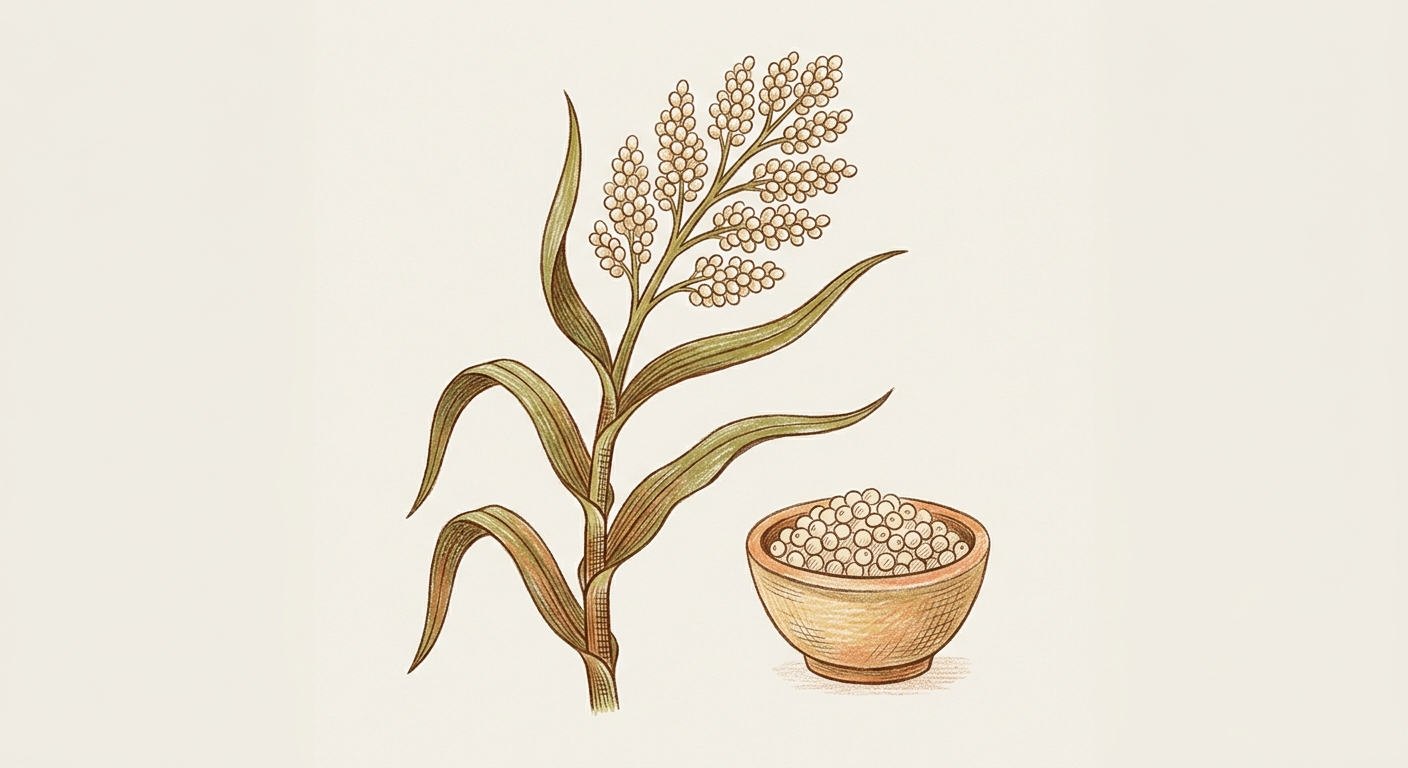
What is Jowar called in India?
One grain, many names. These are the regional and language names we have verified so far — a bracketed placeholder means we are still checking rather than guessing.
What does Jowar look like?
Round grains larger than most millets, about 3–4 mm, usually creamy white to pale yellow; some varieties are red or brown. Jowar flour is off-white and slightly sweet-smelling.
Where is Jowar traditionally used?
Maharashtra, Karnataka, Telangana, Andhra Pradesh, Gujarat, Madhya Pradesh and Rajasthan grow and eat jowar most widely.
How is Jowar used in food?
Traditional uses
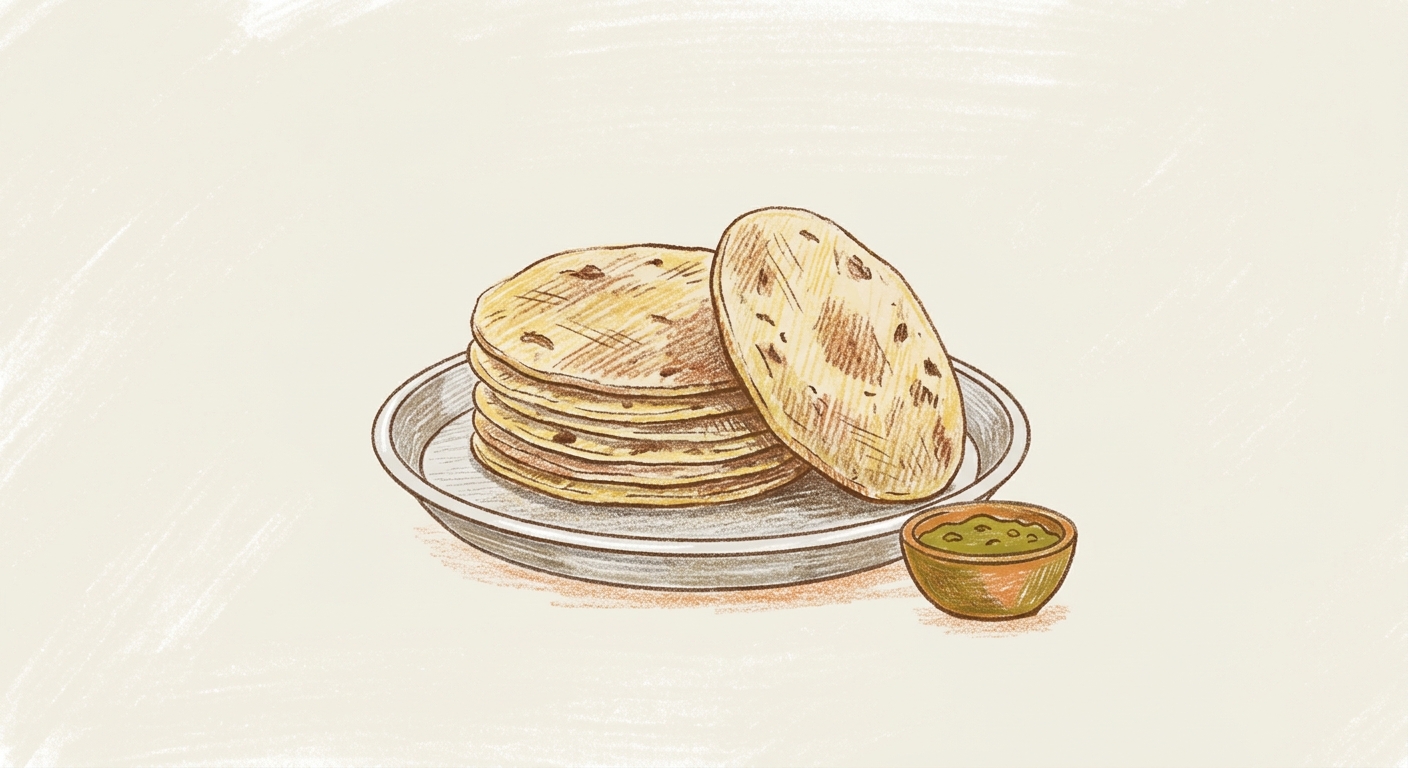
Documented tradition- Jowar bhakri, thick, hand-patted flatbreads eaten with pitla, thecha or curries across Maharashtra and Karnataka (jolada rotti).
- Whole jowar cooked like rice in some regions.
- Popped jowar (jowar dhani) as a light snack.
- Jowar porridges and fermented preparations in farming households.
Modern uses
Pure Platter interpretation- Jowar flour blended into roti and dosa batters.
- Jowar flakes, puffs and baked snacks.
- Jowar-based upma and khichdi as a rice alternative.
Jowar nutrition
| Nutrient | Per 100 g, raw grain |
|---|---|
| Energy | ~349 kcal |
| Protein | ~10.4 g |
| Total fat | ~1.9 g |
| Carbohydrate | ~72.6 g |
| Dietary fibre | ~6.7 g |
| Calcium | ~25 mg |
| Iron | ~4.1 mg |
Values are approximate, per 100 g of raw whole grain, based on the Indian Food Composition Tables (IFCT 2017, ICMR-NIN). Actual values vary with variety, soil, season and processing. Verify against a current laboratory report before quoting.
Comparing grains? Compare all nine in the Millet Library before comparing numbers.
How do you cook Jowar?
Jowar flour makes a crumbly dough; bhakri is traditionally patted out by hand on a flat board and cooked on a hot tawa, often finished with a splash of water. Fresh flour behaves better than old flour for bhakri. Whole jowar grains benefit from soaking for a few hours before pressure-cooking like rice.
Jowar recipes to start with
Step-by-step recipes
Jowar Bhakri20 mins · 2 (4 bhakris)
Ingredients
- 1 cup jowar flour, fresh
- ¾ cup warm water (approx)
- Salt to taste
Method
- Mix the flour and salt, then add warm water little by little and knead into a soft, smooth dough
- Divide into 4 balls. Keep the dough covered so it doesn't dry out
- Place a ball on a flat board and pat it out by hand into a thin round, turning as you go
- Cook on a hot tawa on medium heat, flip, then sprinkle a little water on top and flip again until both sides are cooked with light spots
- Serve hot with pitla, thecha or any dal. Bhakri is best eaten fresh
Is Jowar healthier than rice?
Pure Platter interpretationWhether Jowar is 'healthier than rice' depends entirely on what you compare and how. Per 100 g of raw grain against raw milled white rice (IFCT 2017), Jowar is generally higher in dietary fibre and several minerals, milling and polishing remove much of the bran from white rice. But 'healthier' is not a single measurable property: portion size, cooking method, what the grain replaces in the meal, and the rest of the diet all matter more than any one number. So we don't claim Jowar is 'better' than rice, we show you both sets of numbers and let you decide.
Jowar in a modern kitchen
Jowar's home is the flatbread: bhakri in Maharashtra, jolada rotti in North Karnataka. The dough is made with warm water and patted, not rolled, a skill that takes two or three attempts and then feels obvious. Beyond flatbreads, broken jowar cooks like coarse rice for khichdi, jowar flakes make an excellent upma, and the flour disappears quietly into dosa batter and multigrain atta.
Buying and storing jowar
Buy jowar as whole grain for cooking, or as flour for flatbreads, but buy the flour fresh and often, because it loses its mild sweetness as it ages. Whole grains should look creamy, plump and uniform. Store both airtight and dry; in humid months the flour is happier refrigerated.
What makes Jowar different?
Jowar is Sorghum / great millet (Sorghum bicolor), The drought-hardy grain of bhakri country, Maharashtra, Karnataka and the Deccan. Each millet earns its place in the kitchen differently; compare them all in the Millet Library or browse Indian millets.
Frequently asked questions
Is jowar the same as sorghum?+
Yes. Jowar is the common Indian name for sorghum (Sorghum bicolor).
Is jowar gluten-free?+
The grain itself does not contain gluten-forming proteins. As with any flour, check packaged products for wheat blending or cross-contamination.
What does jowar taste like?+
Mild, slightly sweet and earthy. Fresh jowar bhakri is soft and best eaten hot.
Why doesn't my jowar roti roll out?+
Jowar dough has no gluten network, so rolling tears it. Pat it out by hand, or mix with a portion of wheat flour while you learn.
Is jowar the same as corn (maize)?+
No. Jowar is sorghum (Sorghum bicolor); corn is maize (Zea mays), different plants entirely, though both are gluten-free cereals.
Can jowar be eaten like rice?+
Yes. Whole or broken jowar can be cooked like rice after soaking, though it stays chewier than rice. In many regions the flour and flatbread forms are far more common.
Sources & references
- Indian Food Composition Tables (IFCT), 2017ICMR — National Institute of Nutrition, HyderabadSupports: Approximate nutrient composition of Indian foods, including millets, per 100 g edible portion.
- ICAR — Indian Institute of Millets ResearchIndian Council of Agricultural ResearchSupports: Millet taxonomy, cultivation and general agronomic information.
How we read evidence: Established, reliable sources; Documented tradition, recorded practice, not proven effect; Interpretation, our reading of the evidence; Uncertain, we don't know yet.
Related millets
Pearl millet
Bajra
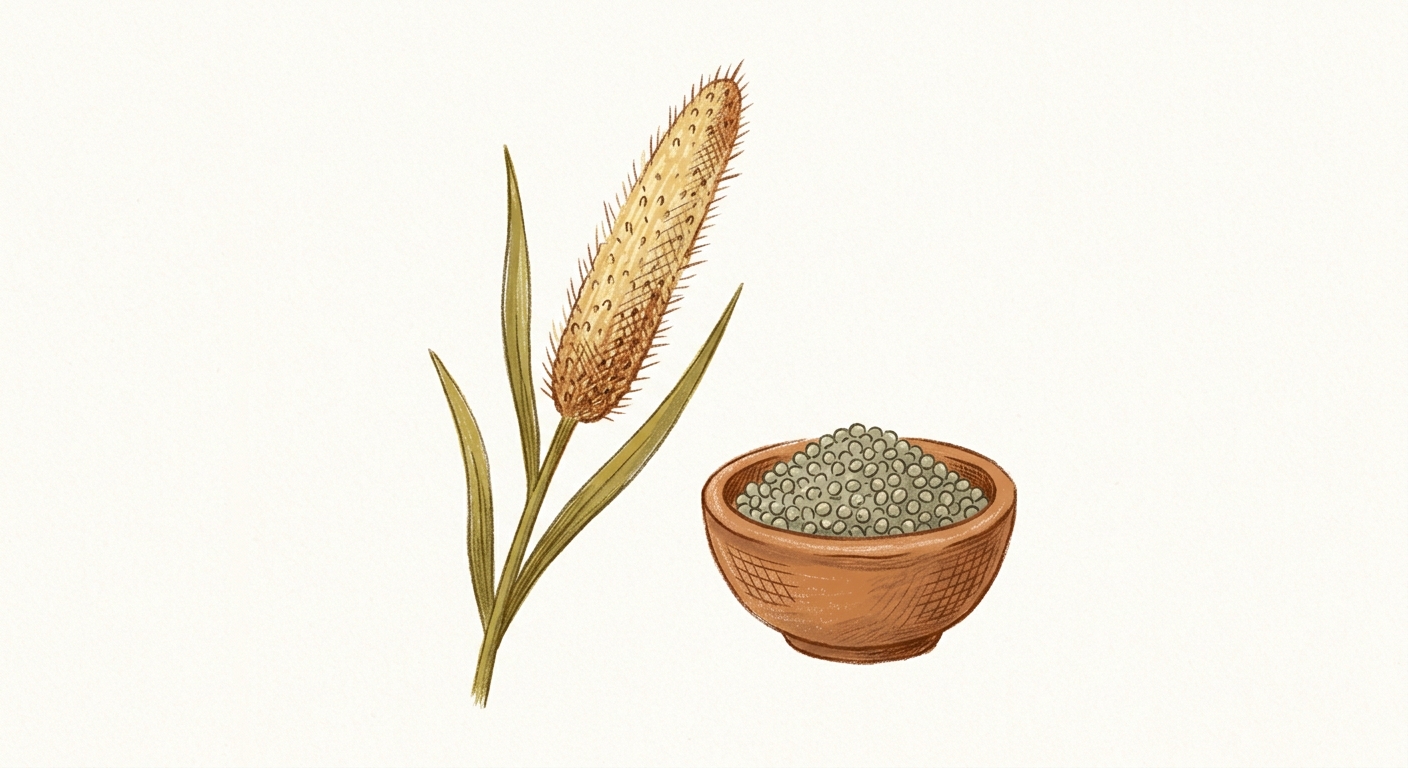
The hearty winter grain of Rajasthan, Gujarat and Haryana.
Know this food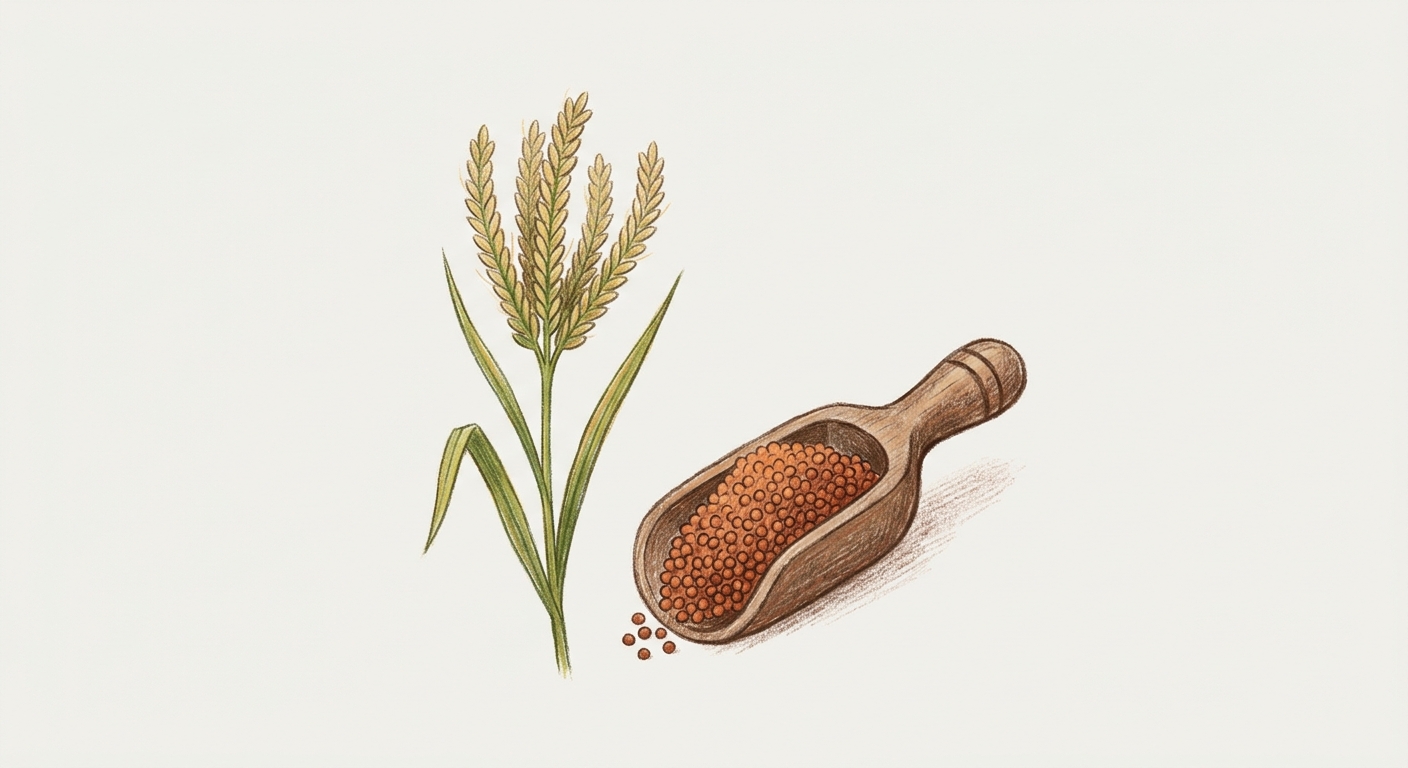
Finger millet
Ragi
The small deep-red grain behind ragi mudde, malt and bhakri.
Know this food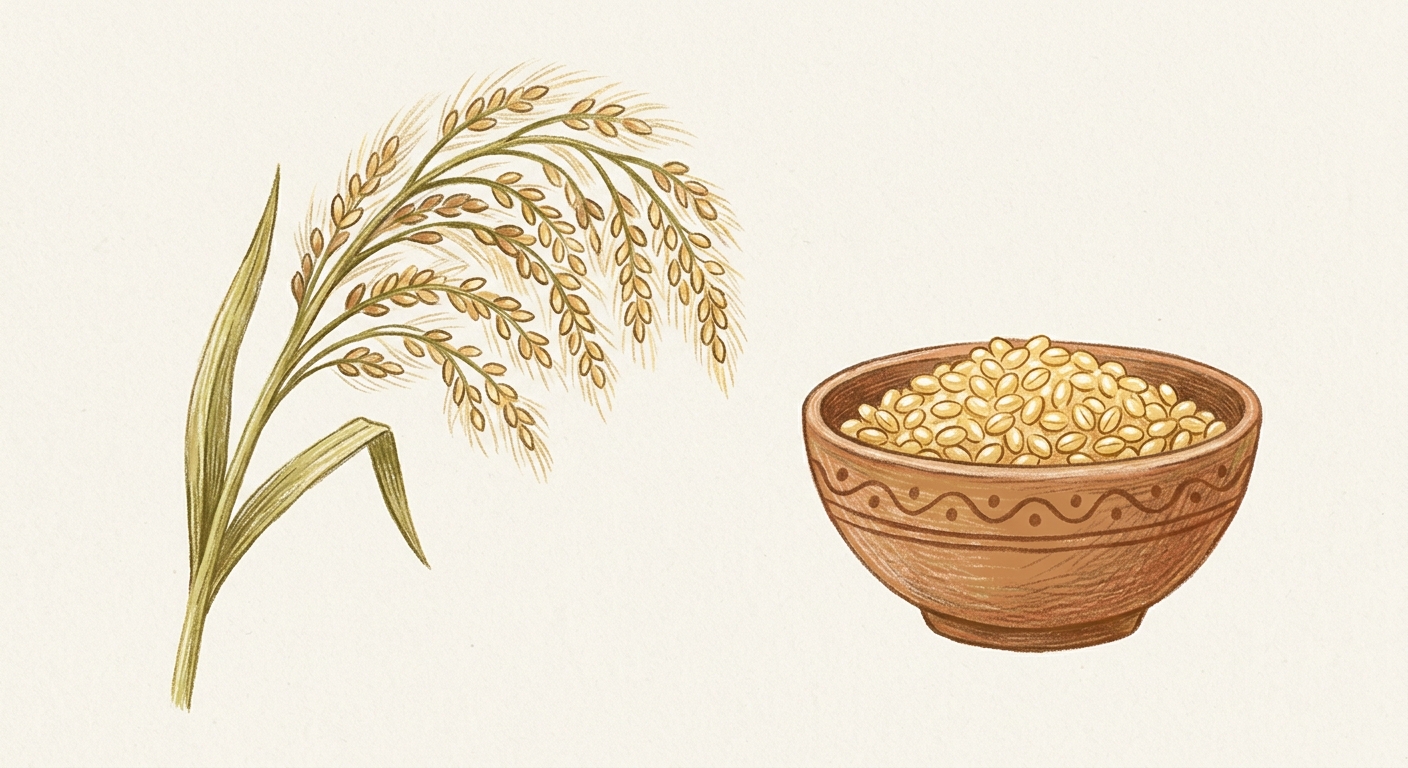
Chena / Common millet
Proso Millet
One of humanity's oldest grains, known in India as chena and panivaragu.
Know this food