
Finger millet · Eleusine coracana
Ragi
The short answer
Ragi is a small-seeded millet known in English as finger millet (Eleusine coracana). It has been cultivated for centuries in parts of South India and East Africa, and is widely eaten in Karnataka, Tamil Nadu, Andhra Pradesh, Telangana and the hills of Uttarakhand and Nepal. Ragi is used as flour for rotis, mudde (soft cooked balls), dosa, porridge and malt drinks. Among commonly eaten Indian grains it stands out for its calcium content.
Last reviewed:
Established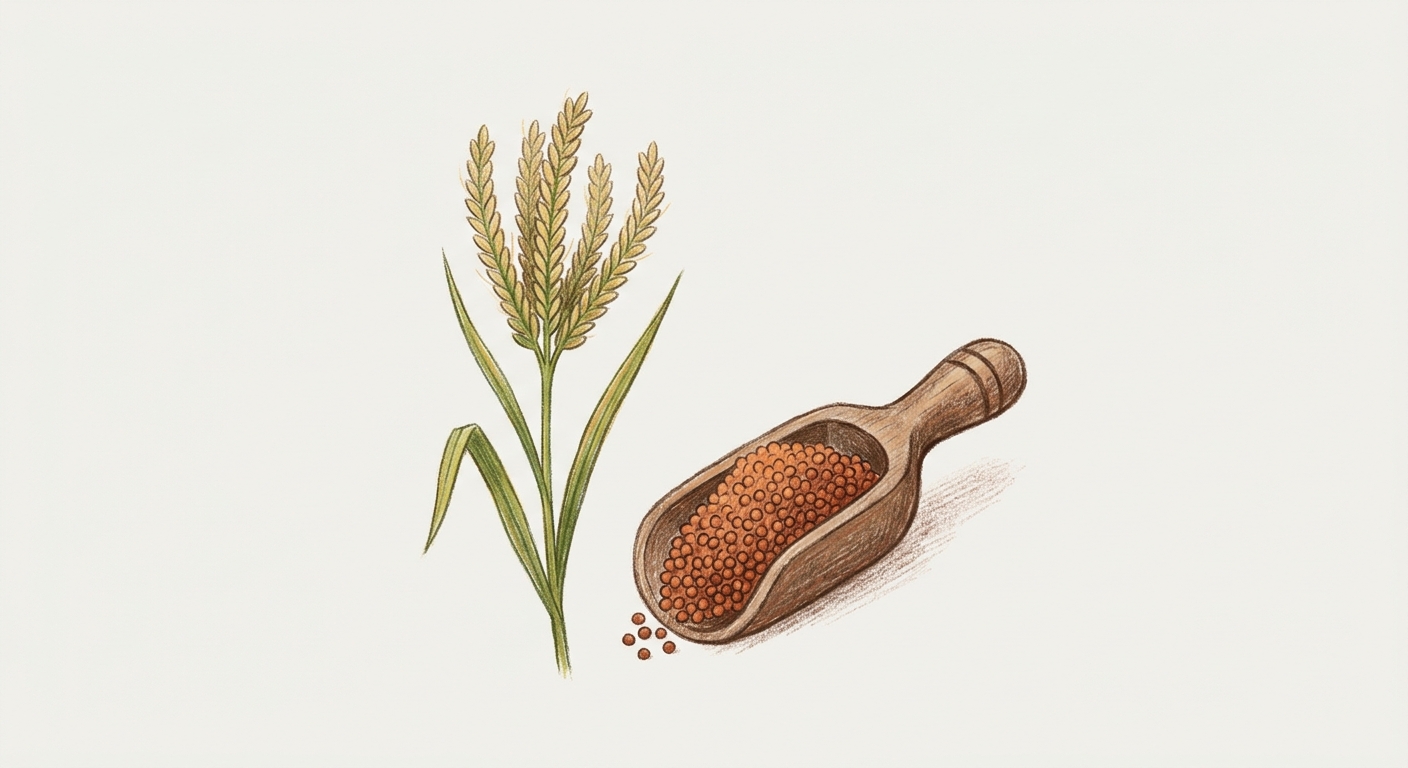
What is Ragi called in India?
One grain, many names. These are the regional and language names we have verified so far — a bracketed placeholder means we are still checking rather than guessing.
What does Ragi look like?
Tiny round seeds, about 1–2 mm across, usually a deep reddish-brown, though varieties range from pale brown to nearly black. Ground ragi flour keeps the characteristic rust colour.
Where is Ragi traditionally used?
Widely grown and eaten in Karnataka, Tamil Nadu, Andhra Pradesh, Telangana, Maharashtra, Uttarakhand and parts of Odisha and Jharkhand.
How is Ragi used in food?
Traditional uses
Documented tradition- Ragi mudde, soft cooked ragi balls eaten with sambar or saaru, a staple across rural Karnataka.
- Ragi malt / ambali, a fermented or fresh porridge drink.
- Ragi rotti, flatbreads cooked on a griddle in Karnataka; nachni bhakri in Maharashtra.
- Fermented ragi preparations and porridges for everyday meals and for weaning foods in many households.
Modern uses
Pure Platter interpretation- Ragi dosa and idli batters blended with rice or used alone.
- Ragi cookies, laddus, chikkis and breakfast porridge mixes.
- Ragi flour blended into chapati atta to change texture and flavour.
Ragi nutrition
| Nutrient | Per 100 g, raw grain |
|---|---|
| Energy | ~328 kcal |
| Protein | ~7.3 g |
| Total fat | ~1.3 g |
| Carbohydrate | ~72 g |
| Dietary fibre | ~11 g |
| Calcium | ~344 mg |
| Iron | ~3.9 mg |
Values are approximate, per 100 g of raw whole grain, based on the Indian Food Composition Tables (IFCT 2017, ICMR-NIN). Actual values vary with variety, soil, season and processing. Verify against a current laboratory report before quoting.
Comparing grains? Compare all nine in the Millet Library before comparing numbers.
How do you cook Ragi?
Ragi has no gluten-forming proteins, so doughs do not stretch the way wheat dough does; rotis are usually patted by hand rather than rolled. Flour is typically cooked, as porridge, mudde or dosa, rather than eaten raw. For mudde, flour is whisked into boiling water and stirred to a smooth, stiff paste. Toasting the flour lightly before cooking deepens its nutty flavour.
Ragi recipes to start with
Step-by-step recipes
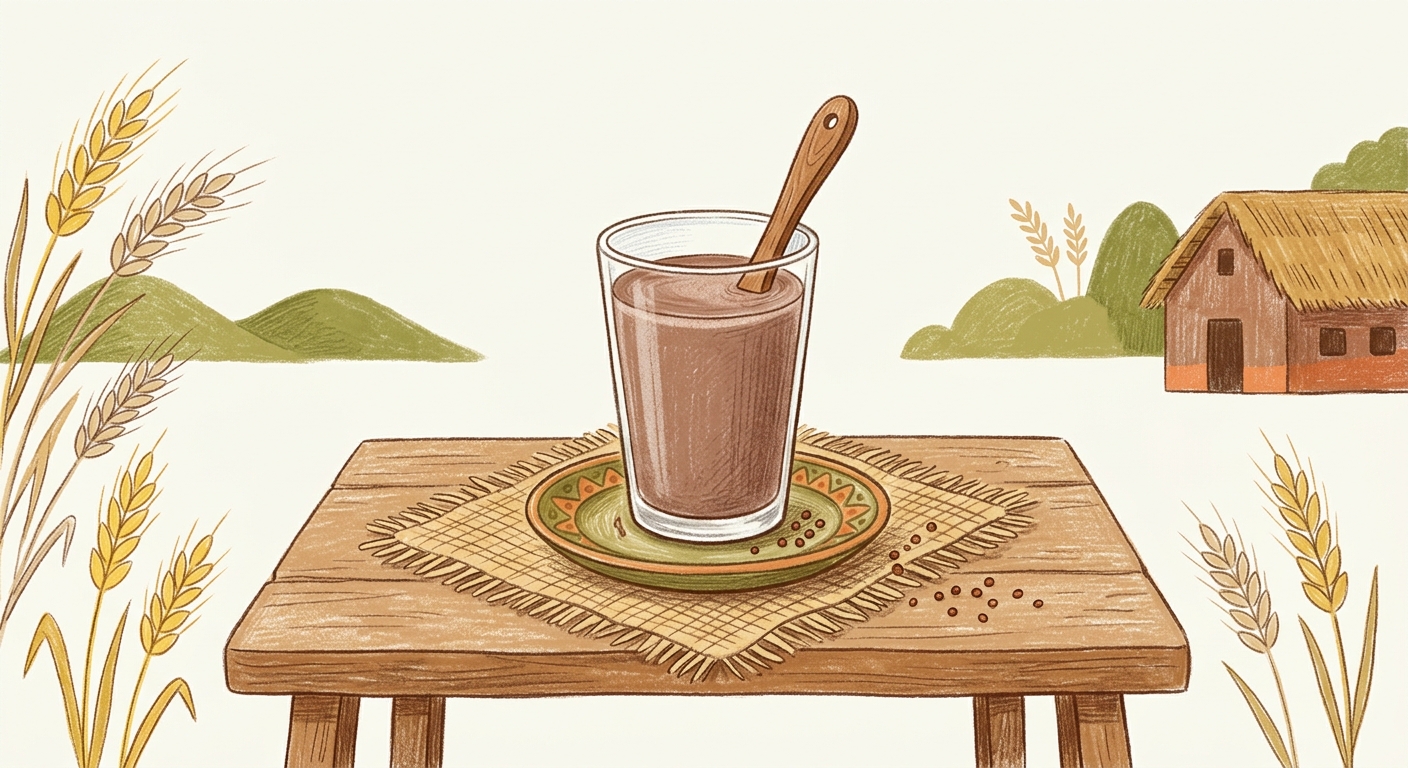
Ragi Malt (Sweet)10 mins · 2
Ingredients
- 2 tbsp ragi flour
- 1½ cups milk or water
- 1 tbsp jaggery (adjust to taste)
- A pinch of cardamom powder
Method
- Whisk the ragi flour with half a cup of cold water or milk until completely smooth, no lumps
- Bring the remaining milk or water to a gentle boil in a pan
- Pour in the ragi paste, stirring constantly, and cook 3-4 minutes until glossy and thick
- Take off the heat, stir in jaggery and cardamom, and serve warm or chilled
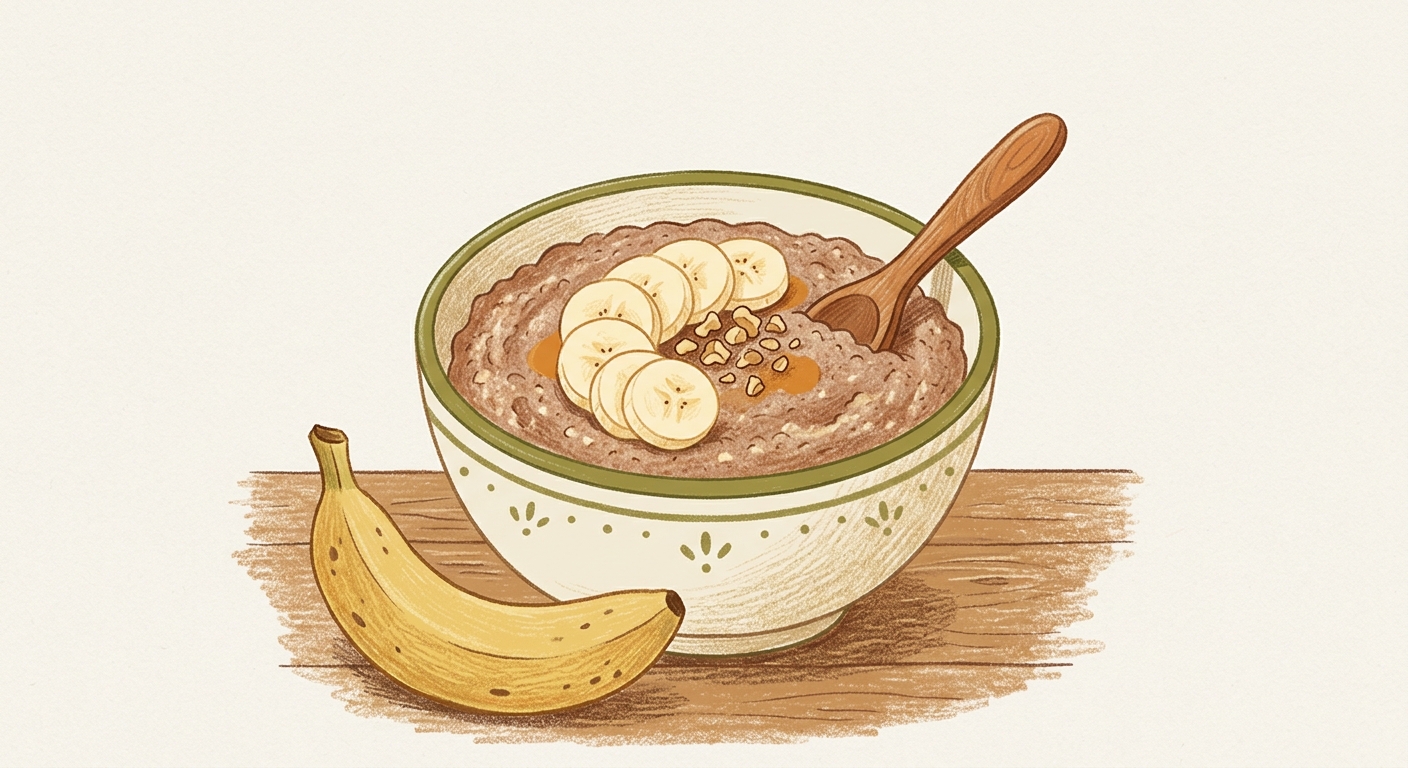
Ragi Banana Porridge15 mins · 2
Ingredients
- 3 tbsp ragi flour
- 1 cup water or milk
- 1 ripe banana
- 1 tsp jaggery (optional)
Method
- Whisk ragi flour with half a cup of cold water to a smooth paste
- Boil the remaining water, stir in the paste and cook 4-5 minutes till glossy
- Mash in the banana, add jaggery, serve warm
Is Ragi healthier than rice?
Pure Platter interpretationWhether Ragi is 'healthier than rice' depends entirely on what you compare and how. Per 100 g of raw grain against raw milled white rice (IFCT 2017), Ragi is generally higher in dietary fibre and several minerals, milling and polishing remove much of the bran from white rice. But 'healthier' is not a single measurable property: portion size, cooking method, what the grain replaces in the meal, and the rest of the diet all matter more than any one number. So we don't claim Ragi is 'better' than rice, we show you both sets of numbers and let you decide.
Ragi in a modern kitchen
Ragi enters a modern kitchen most easily as flour. Stir a ladle into dosa or idli batter, blend a fifth to a third into chapati atta, or whisk it into milk or water for a quick porridge. Ragi mudde looks intimidating but is a five-minute technique: flour whisked into boiling water and stirred to a smooth, stiff ball. Because ragi flour has no gluten network, breads made only from it stay flat, rotis, dosas, pancakes and steamed preparations are its natural home.
Buying and storing ragi
Whole ragi keeps well, a year or more in an airtight container stored cool and dry. Ragi flour is more perishable than wheat flour because the grain's germ carries natural oils; buy smaller quantities, store it airtight, refrigerate in warm months, and use within a couple of months. Whether whole or milled, look for a clean, dry, rust-coloured product without musty smell.
Ragi products
Pure Platter Ragi Flour
Stone-milled finger millet flour. Sample listing, awaiting verified label data.
What makes Ragi different?
Ragi is Finger millet (Eleusine coracana), The small deep-red grain behind ragi mudde, malt and bhakri. Each millet earns its place in the kitchen differently; compare them all in the Millet Library or browse Indian millets.
Frequently asked questions
What is ragi called in English?+
Ragi is called finger millet in English. Its scientific name is Eleusine coracana.
Is ragi gluten-free?+
Ragi grain does not contain gluten-forming proteins. However, packaged ragi products can be cross-contaminated or blended with wheat, so always read the label if you need to avoid gluten.
Why is ragi known for calcium?+
Among commonly eaten Indian grains, ragi has an unusually high calcium content, roughly 344 mg per 100 g in IFCT 2017, several times that of rice or wheat. That is a comparison of composition, not a health claim about outcomes.
How do I start cooking with ragi?+
The easiest entry points are ragi dosa batter, a simple ragi porridge, or blending 20–30% ragi flour into your usual chapati atta.
Is ragi malt different from ragi flour?+
Ragi malt is a drink made from ragi flour, sometimes from flour of sprouted (malted) ragi, which is where the name comes from. Sprouting is a documented household practice; plain roasted ragi flour is also widely used for the same drink.
Can I bake bread with ragi?+
Not on its own, ragi has no gluten-forming proteins, so it cannot trap the gas a loaf needs. Ragi works in flatbreads, dosas, pancakes and steamed foods; for leavened bread it must be blended with wheat flour or given a binder.
Sources & references
- Indian Food Composition Tables (IFCT), 2017ICMR — National Institute of Nutrition, HyderabadSupports: Approximate nutrient composition of Indian foods, including millets, per 100 g edible portion.
- ICAR — Indian Institute of Millets ResearchIndian Council of Agricultural ResearchSupports: Millet taxonomy, cultivation and general agronomic information.
How we read evidence: Established, reliable sources; Documented tradition, recorded practice, not proven effect; Interpretation, our reading of the evidence; Uncertain, we don't know yet.
Related millets
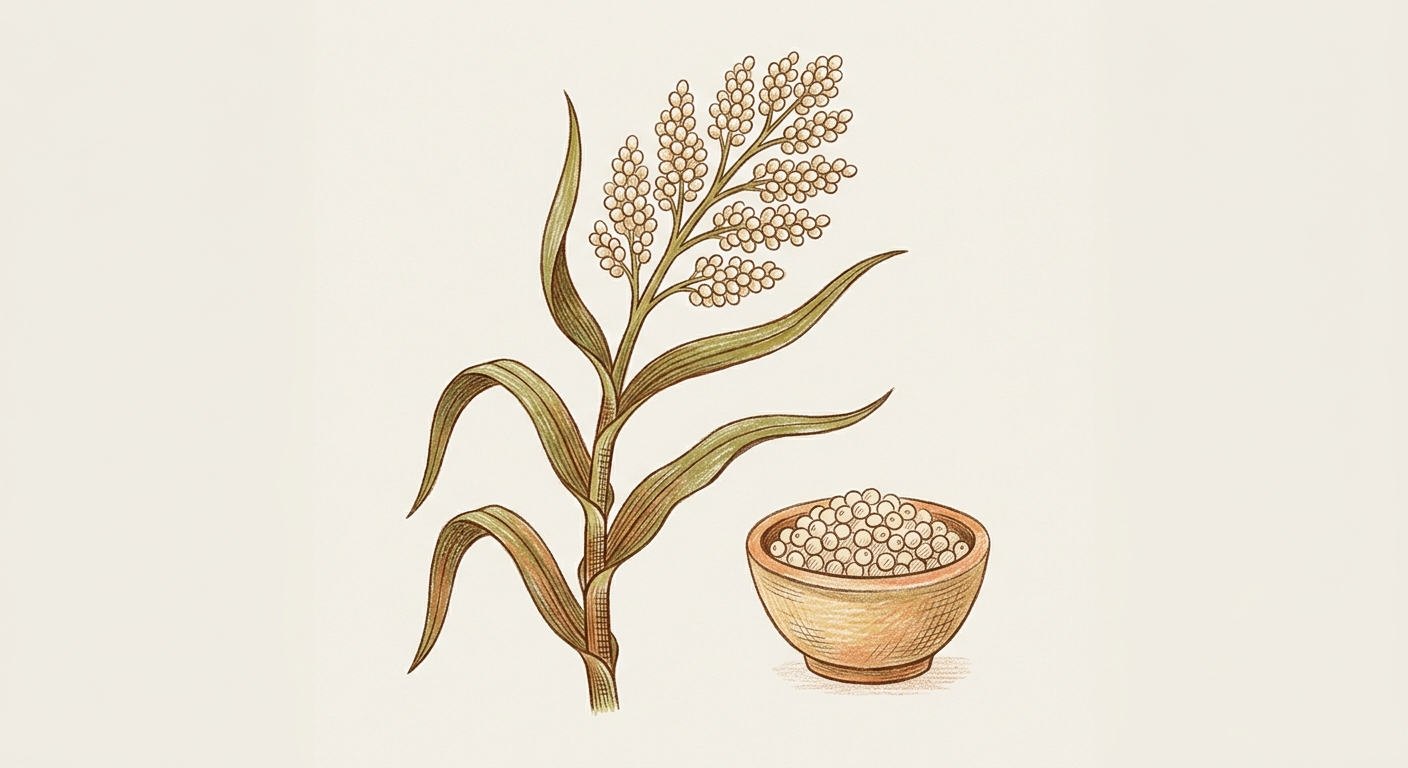
Sorghum / great millet
Jowar
The drought-hardy grain of bhakri country, Maharashtra, Karnataka and the Deccan.
Know this food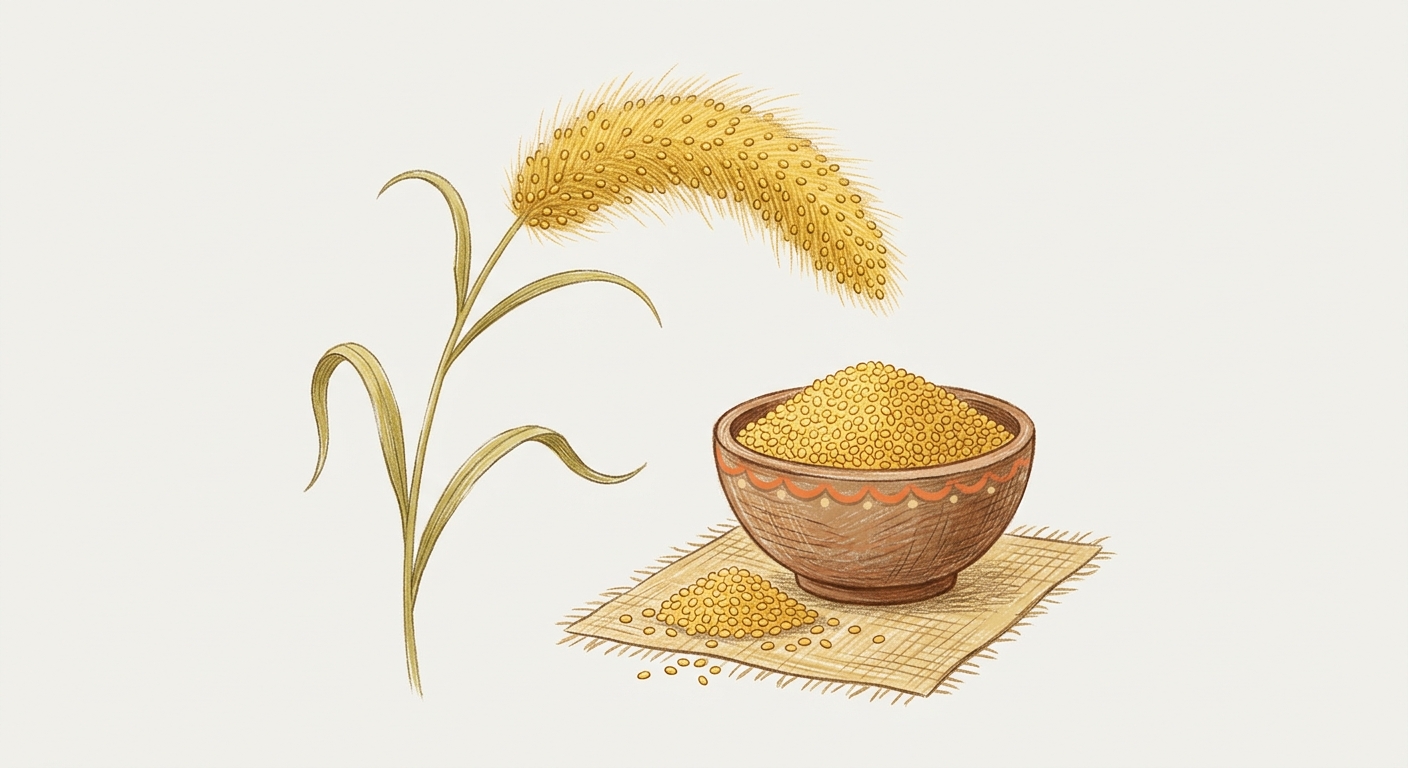
Kangni / Thinai
Foxtail Millet
One of the oldest cultivated millets, small golden grains for pongal, upma and rice-style cooking.
Know this food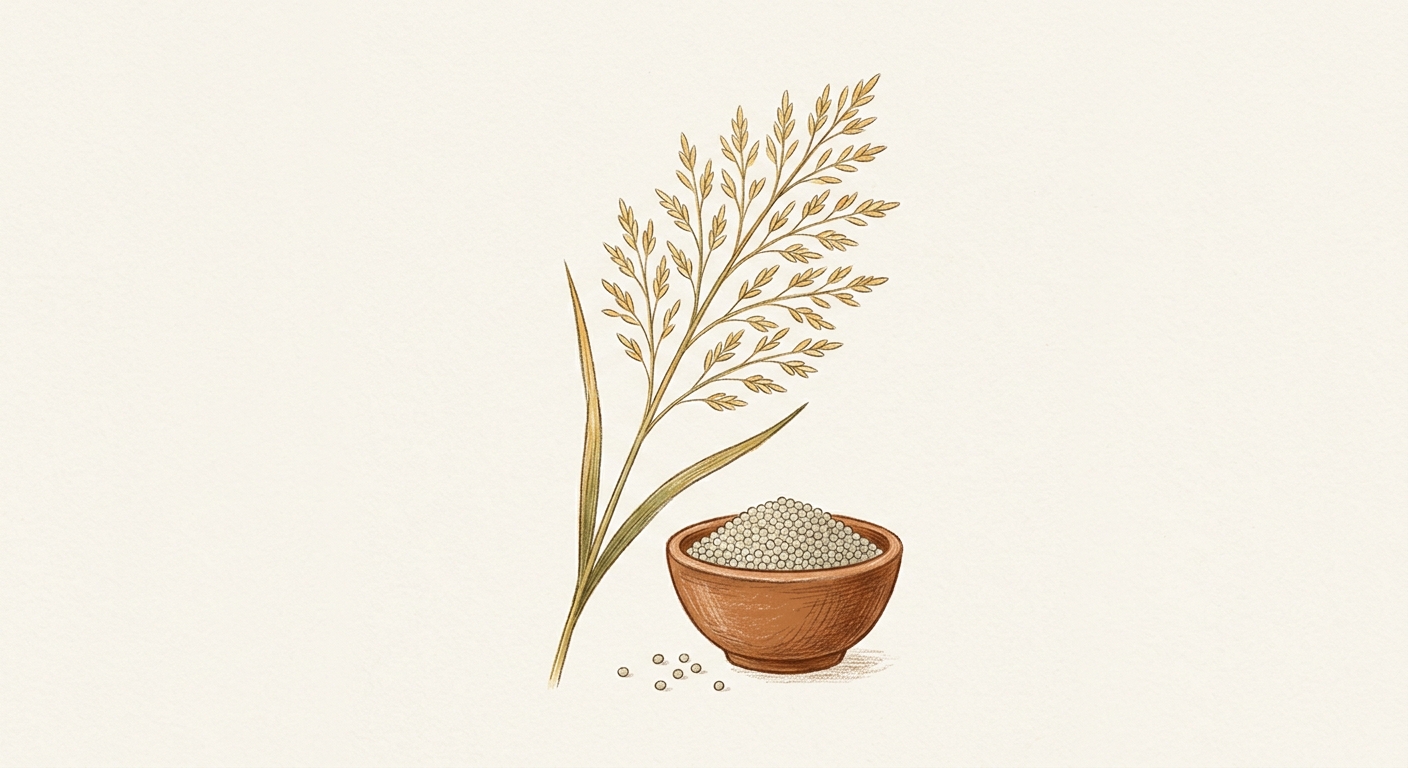
Kutki / Samai
Little Millet
Small name, quiet workhorse, samai upma and pongal are made from this grain.
Know this food