
Pearl millet · Pennisetum glaucum
Bajra
The short answer
Bajra is pearl millet (Pennisetum glaucum), a hardy cereal that grows in some of India's driest, harshest farmland. It is a winter staple in Rajasthan, Gujarat, Haryana and parts of Uttar Pradesh and Maharashtra, where it is eaten as dense, rustic rotis with ghee, jaggery, garlic chutney or kadhi. The grains are grey-green and slightly pointed, like tiny pearls, which gives the millet its English name.
Last reviewed:
Established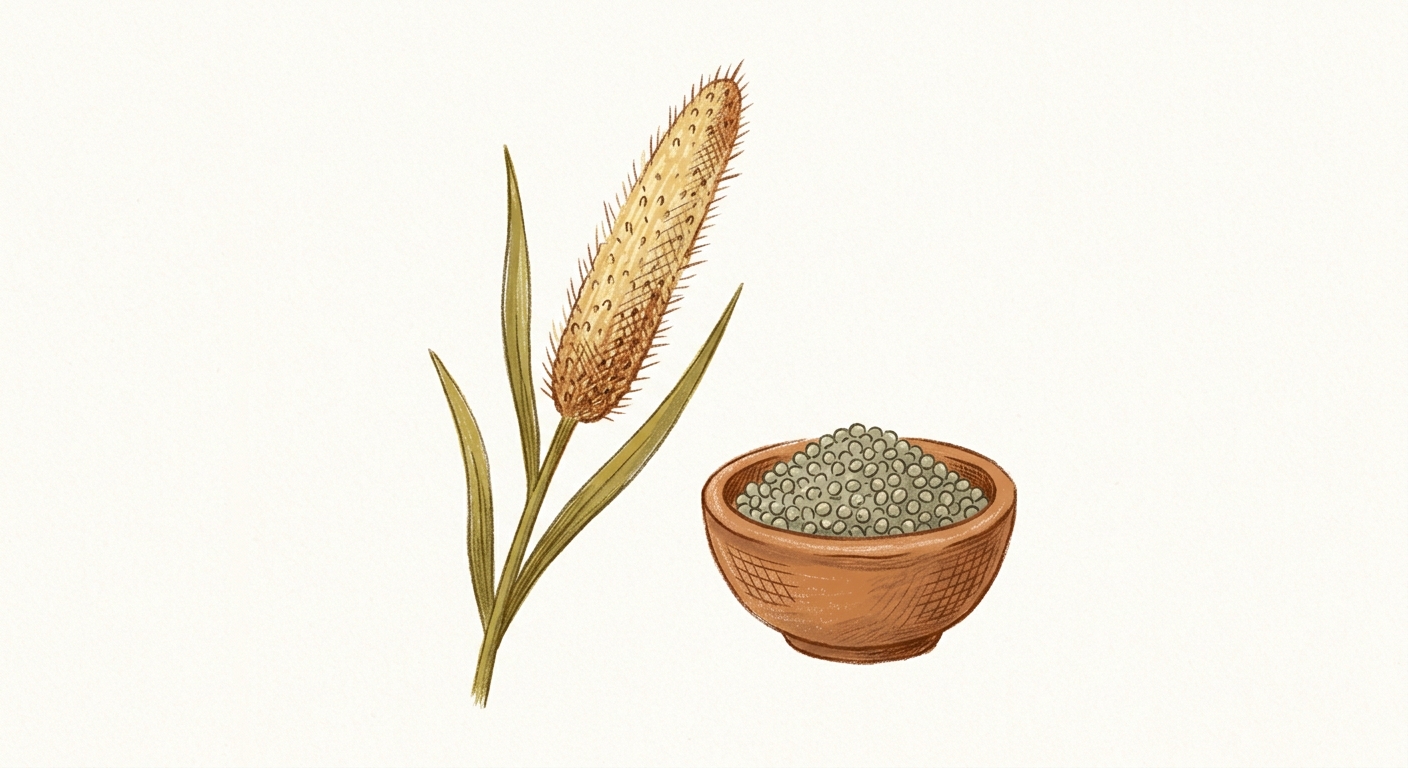
What is Bajra called in India?
One grain, many names. These are the regional and language names we have verified so far — a bracketed placeholder means we are still checking rather than guessing.
What does Bajra look like?
Small, tear-shaped grey-green to grey-brown grains, 3–4 mm long. The flour is greyish with a distinctive earthy aroma.
Where is Bajra traditionally used?
Rajasthan, Gujarat, Haryana, Maharashtra, Uttar Pradesh and parts of Karnataka and Tamil Nadu (as kambu).
How is Bajra used in food?
Traditional uses
Documented tradition- Bajra rotla / roti, thick, rustic flatbreads, especially in winter, served with ghee, jaggery, lasun chutney or kadhi.
- Bajra khichdi and raab (a warm, thin porridge) in Rajasthan and Gujarat.
- Kambu koozh, a fermented pearl-millet porridge of Tamil Nadu.
Modern uses
Pure Platter interpretation- Bajra flour blended into everyday rotis.
- Bajra dosa, idli and pongal preparations.
- Baked and roasted bajra snacks.
Bajra nutrition
| Nutrient | Per 100 g, raw grain |
|---|---|
| Energy | ~361 kcal |
| Protein | ~11.6 g |
| Total fat | ~5.0 g |
| Carbohydrate | ~67.5 g |
| Dietary fibre | ~11.3 g |
| Calcium | ~42 mg |
| Iron | ~8.0 mg |
Values are approximate, per 100 g of raw whole grain, based on the Indian Food Composition Tables (IFCT 2017, ICMR-NIN). Actual values vary with variety, soil, season and processing. Verify against a current laboratory report before quoting.
Comparing grains? Compare all nine in the Millet Library before comparing numbers.
How do you cook Bajra?
Bajra flour, like other millet flours, is gluten-free and pat-outs rather than rolls. Rotlas are made with warm water, patted thick, and cooked slowly. Traditionally bajra is eaten more in winter; it is a warming, dense grain that suits cold weather and hard physical work.
Bajra recipes to start with
Step-by-step recipes
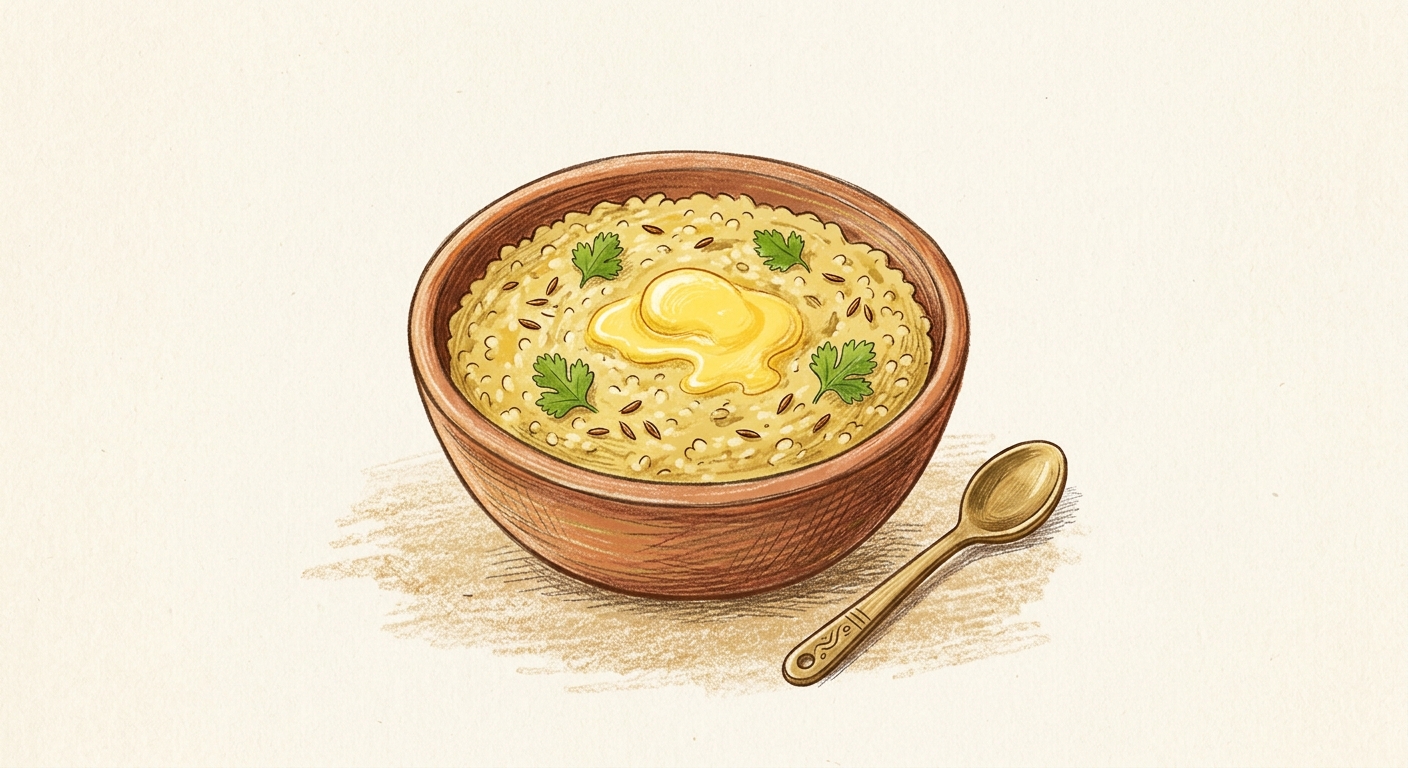
Bajra Khichdi35 mins + soaking · 3
Ingredients
- ½ cup bajra (pearl millet), soaked 4 hours or overnight
- ½ cup split moong dal
- 1 tsp ghee
- 1 tsp cumin seeds
- 1 inch ginger, grated
- Salt to taste
- 3½ cups water
Method
- Rinse the soaked bajra and the moong dal
- Heat ghee in a pressure cooker, add cumin and ginger and let them sizzle
- Add bajra, dal, salt and water. Pressure cook for 4-5 whistles
- Let the pressure settle, open and mash lightly for a soft khichdi
- Serve hot with a spoon of ghee, curd or kadhi
Is Bajra healthier than rice?
Pure Platter interpretationWhether Bajra is 'healthier than rice' depends entirely on what you compare and how. Per 100 g of raw grain against raw milled white rice (IFCT 2017), Bajra is generally higher in dietary fibre and several minerals, milling and polishing remove much of the bran from white rice. But 'healthier' is not a single measurable property: portion size, cooking method, what the grain replaces in the meal, and the rest of the diet all matter more than any one number. So we don't claim Bajra is 'better' than rice, we show you both sets of numbers and let you decide.
Bajra in a modern kitchen
Bajra's heartland cooking is built around the rotla: a thick, hand-patted flatbread served hot with ghee, jaggery, garlic chutney or kadhi. Beyond it, bajra makes a dense, satisfying khichdi (often with moong dal), a warming thin porridge called raab, and, in Tamil Nadu, as kambu, a fermented porridge, koozh. The flour blends well into everyday rotis at 25–30% while you learn its behaviour.
Buying and storing bajra
Bajra flour contains natural oils and turns noticeably bitter as it ages, this is the grain, not spoilage, but it ruins the taste. Buy flour in small quantities, smell it (it should be earthy, not sharp), and store it airtight in the fridge. Whole bajra keeps far longer. Pearled or broken bajra (bajra daliya) cooks faster and is easier for khichdi.
What makes Bajra different?
Bajra is Pearl millet (Pennisetum glaucum), The hearty winter grain of Rajasthan, Gujarat and Haryana. Each millet earns its place in the kitchen differently; compare them all in the Millet Library or browse Indian millets.
Frequently asked questions
What is bajra called in English?+
Bajra is pearl millet, Pennisetum glaucum.
Is bajra a winter food?+
In Rajasthan and Gujarat it is traditionally eaten more in winter, often with ghee and jaggery. This is a documented food custom; claims about the body 'generating heat' are traditional belief rather than established physiology.
Does bajra have more iron than other millets?+
In IFCT 2017 figures, pearl millet's iron content (about 8 mg per 100 g) is on the higher side among common millets, though actual values vary by variety and soil.
Is bajra gluten-free?+
The grain contains no gluten-forming proteins. Check packaged flours for blending or cross-contamination.
Why did my bajra flour turn bitter?+
Bajra's natural oils oxidise as the flour sits, producing bitterness. It is a known characteristic of the grain, not a defect in your kitchen, buy fresh flour, refrigerate it, and use it quickly.
Can bajra be cooked like rice?+
Whole bajra needs long cooking or a pressure cooker and stays firm; most home cooks find broken bajra (daliya) or bajra flour far more convenient for everyday meals.
Sources & references
- Indian Food Composition Tables (IFCT), 2017ICMR — National Institute of Nutrition, HyderabadSupports: Approximate nutrient composition of Indian foods, including millets, per 100 g edible portion.
- ICAR — Indian Institute of Millets ResearchIndian Council of Agricultural ResearchSupports: Millet taxonomy, cultivation and general agronomic information.
How we read evidence: Established, reliable sources; Documented tradition, recorded practice, not proven effect; Interpretation, our reading of the evidence; Uncertain, we don't know yet.
Related millets
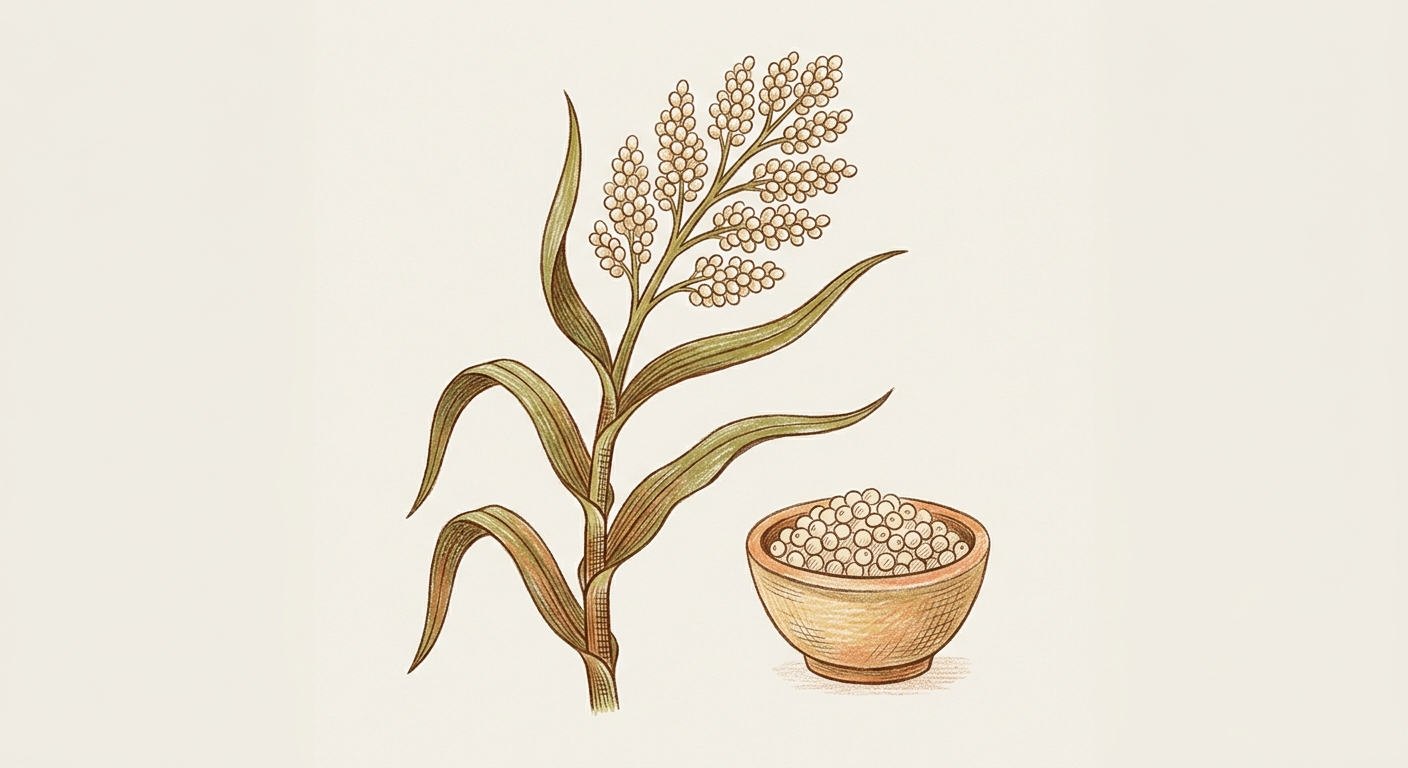
Sorghum / great millet
Jowar
The drought-hardy grain of bhakri country, Maharashtra, Karnataka and the Deccan.
Know this food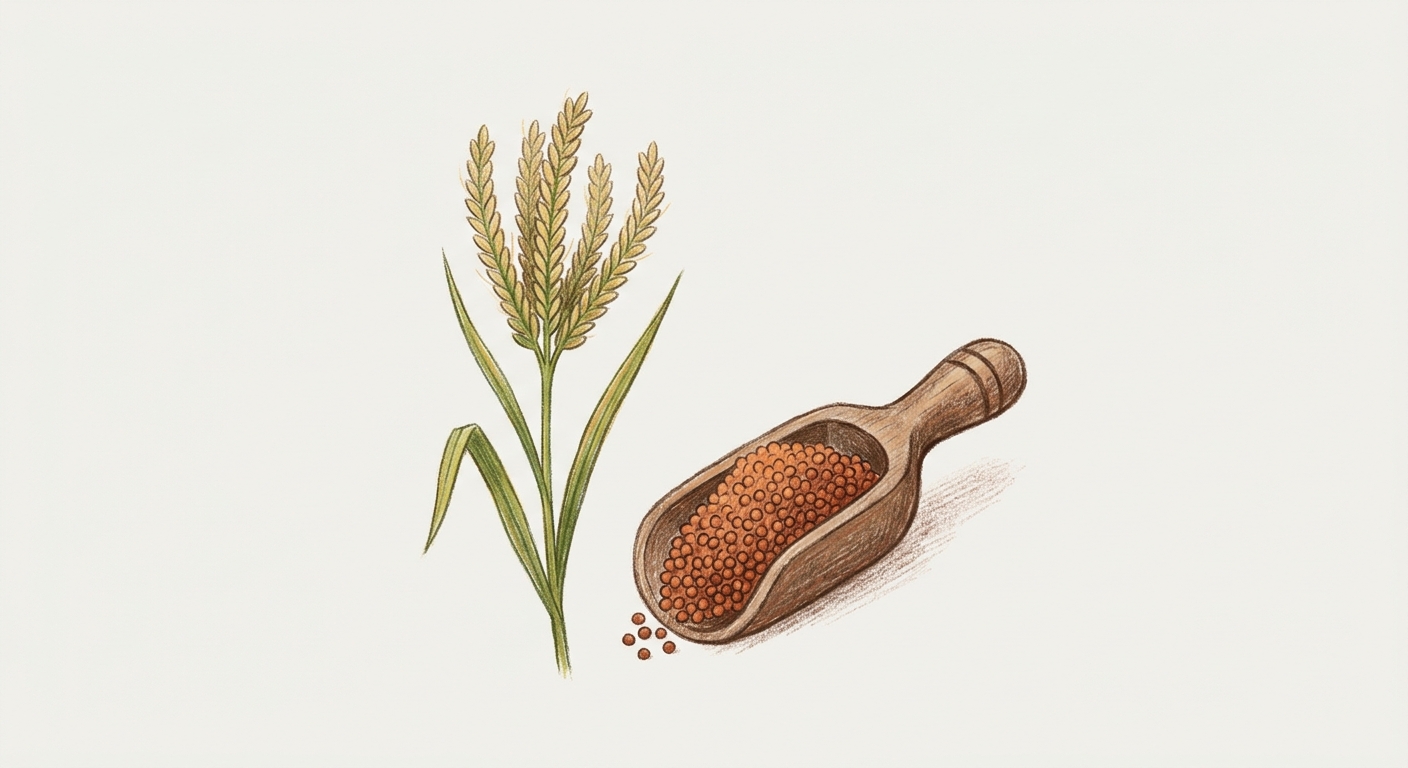
Finger millet
Ragi
The small deep-red grain behind ragi mudde, malt and bhakri.
Know this food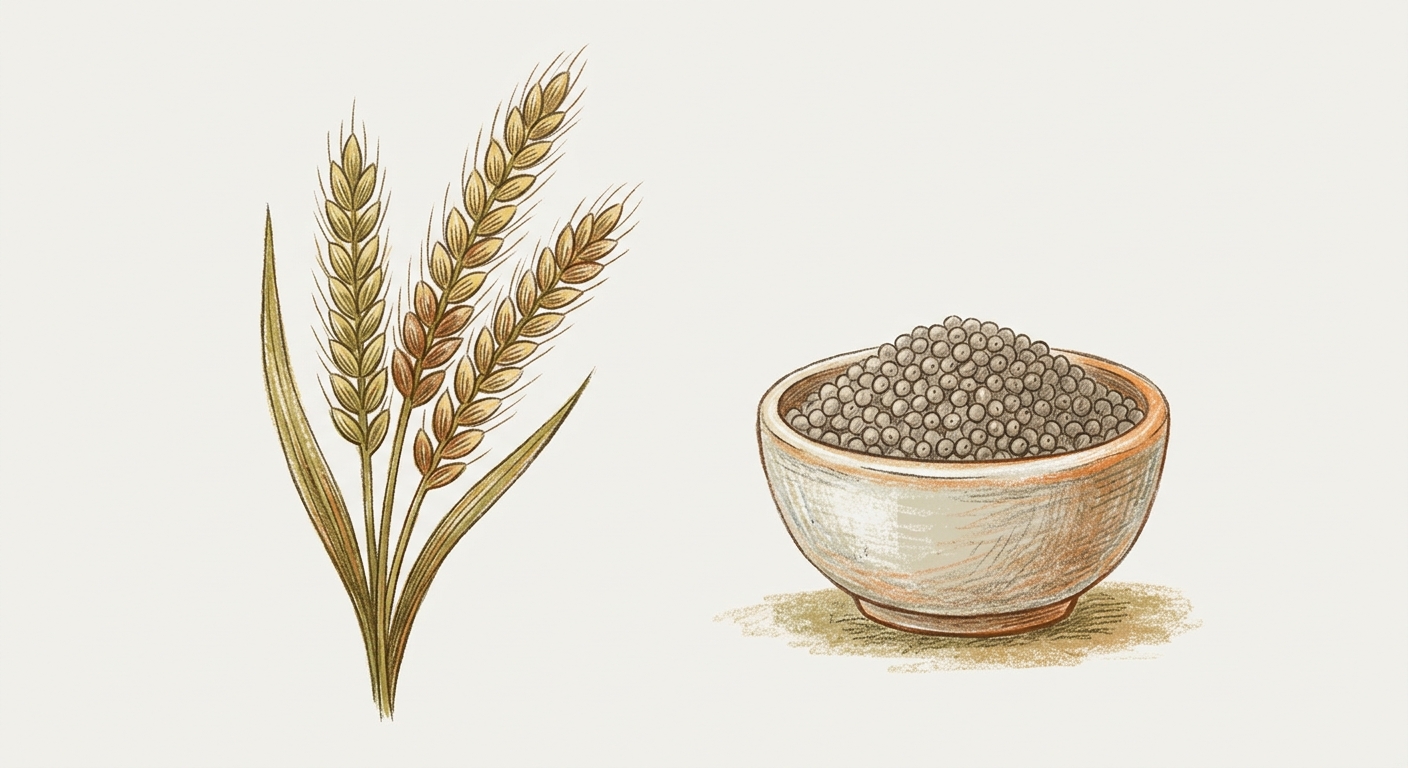
Kodon / Varagu
Kodo Millet
An ancient Deccan grain, still cooked as varagu arisi in Tamil kitchens.
Know this food