
Korale · Urochloa ramosa
BrowntopMillet
The short answer
Browntop millet (Urochloa ramosa, formerly Brachiaria ramosa) is one of the least documented of India's cultivated millets. It is grown on a small scale mainly in Karnataka (where it is called korale) and parts of Andhra Pradesh and Telangana (andu korralu). The grains are small and brownish. Reliable published lab data for browntop is thinner than for other millets, so we mark figures on this page as indicative until lab-verified values are available.
Last reviewed:
Uncertain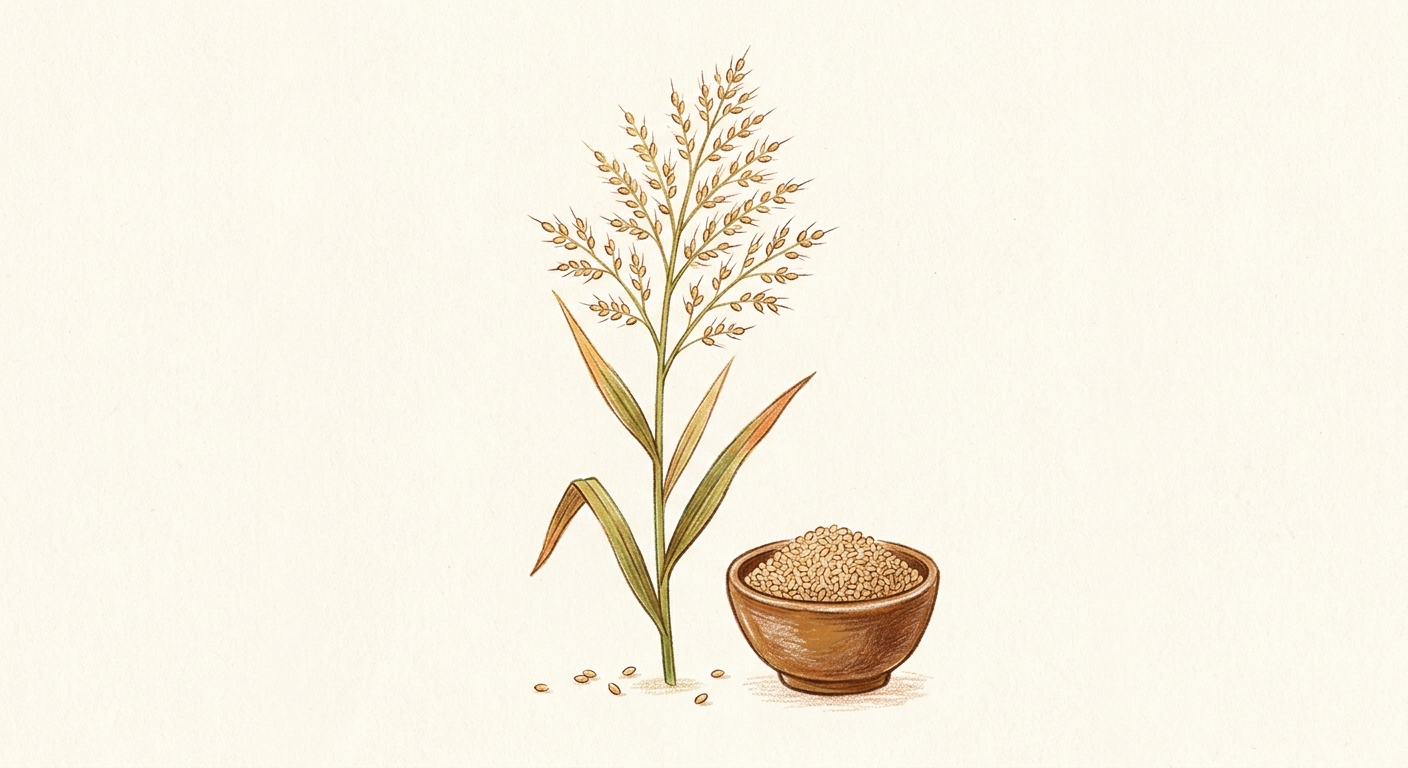
What is Browntop Millet called in India?
One grain, many names. These are the regional and language names we have verified so far — a bracketed placeholder means we are still checking rather than guessing.
What does Browntop Millet look like?
Small, oval, light-brown to tan grains, visually close to other small millets. Browntop is also grown in some countries as a forage and cover crop.
Where is Browntop Millet traditionally used?
Cultivated mainly in Karnataka and adjoining districts of Andhra Pradesh and Telangana, mostly in dryland farming.
How is Browntop Millet used in food?
Traditional uses
Documented tradition- Cooked like rice in the regions where it is grown.
- Used in local porridge and khichdi-style preparations.
- [ADD SOURCE], documented traditional preparations for browntop millet are still being researched; we will not invent them.
Modern uses
Pure Platter interpretation- Rice substitute in pulao, pongal and khichdi.
- Flour for dosa and roti blends.
Browntop Millet nutrition
| Nutrient | Per 100 g, raw grain |
|---|---|
| Energy | [INSERT LAB-VERIFIED NUTRITION] |
| Protein | [INSERT LAB-VERIFIED NUTRITION] |
| Total fat | [INSERT LAB-VERIFIED NUTRITION] |
| Carbohydrate | [INSERT LAB-VERIFIED NUTRITION] |
| Dietary fibre | [INSERT LAB-VERIFIED NUTRITION] |
| Calcium | [INSERT LAB-VERIFIED NUTRITION] |
| Iron | [INSERT LAB-VERIFIED NUTRITION] |
Values are approximate, per 100 g of raw whole grain, based on the Indian Food Composition Tables (IFCT 2017, ICMR-NIN). Actual values vary with variety, soil, season and processing. Verify against a current laboratory report before quoting.
Comparing grains? Compare all nine in the Millet Library before comparing numbers.
How do you cook Browntop Millet?
Where it is eaten, browntop millet is cooked like other small millets: rinse, about 1 part millet to 2 parts water, simmer 12–15 minutes. Because published guidance is thin, treat cooking ratios as a starting point and adjust to texture.
Browntop Millet recipes to start with
Step-by-step recipes
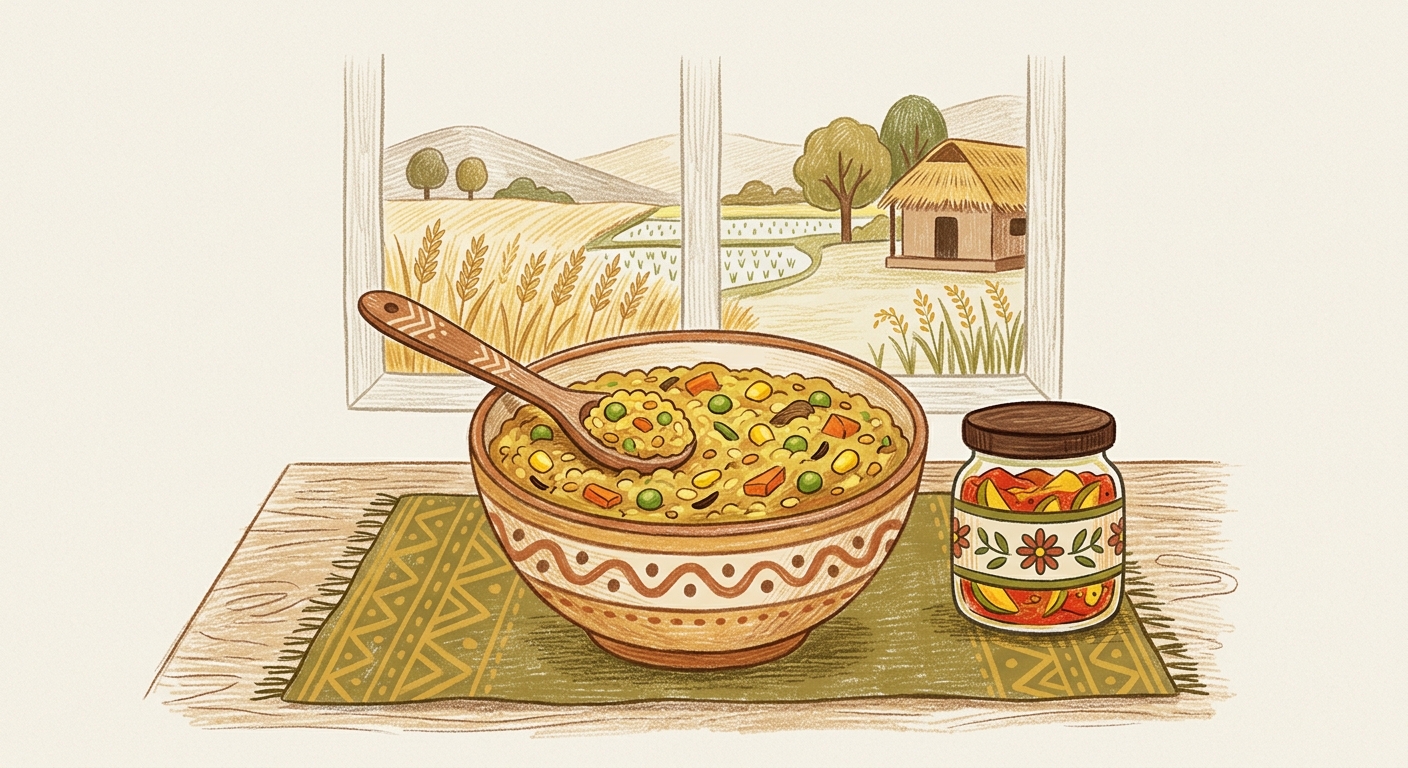
Browntop Millet Khichdi30 mins · 2
Ingredients
- ½ cup browntop millet (korale), rinsed
- ¼ cup moong dal
- ½ cup chopped vegetables
- 1 tsp ghee
- 1 tsp cumin seeds
- Salt to taste
- 2½ cups water
Method
- Heat ghee in a pressure cooker and crackle the cumin
- Add millet, dal, vegetables, salt and water
- Pressure cook for 3 whistles and let the pressure settle naturally
- Mash lightly and serve hot with curd or pickle
Is Browntop Millet healthier than rice?
Pure Platter interpretationWhether Browntop Millet is 'healthier than rice' depends entirely on what you compare and how. Per 100 g of raw grain against raw milled white rice (IFCT 2017), Browntop Millet is generally higher in dietary fibre and several minerals, milling and polishing remove much of the bran from white rice. But 'healthier' is not a single measurable property: portion size, cooking method, what the grain replaces in the meal, and the rest of the diet all matter more than any one number. So we don't claim Browntop Millet is 'better' than rice, we show you both sets of numbers and let you decide.
Browntop Millet in a modern kitchen
Where browntop is eaten, mainly Karnataka and adjoining districts, it is cooked like other small millets: rinsed, boiled soft, used in khichdi and pulao-style dishes. Published recipe literature for browntop is thin, so our guidance here is deliberately modest: treat it as you would foxtail or little millet, start with 1:2 water, and adjust. As we document more, this section will grow.
Buying and storing browntop millet
Browntop is the hardest of the nine to find: look for 'korale' from Karnataka millet sellers, farmers' collectives and speciality online stores. Because supply chains are small, buy from sellers who can tell you where the grain was grown and when it was harvested.
What makes Browntop Millet different?
Browntop Millet is also known as Korale (Urochloa ramosa), The least-known of India's cultivated millets, we are careful about what we claim about it. Each millet earns its place in the kitchen differently; compare them all in the Millet Library or browse Indian millets.
Frequently asked questions
What is browntop millet called in India?+
Korale in Kannada and andu korralu in Telugu are documented names. Names in other Indian languages are still being verified, we prefer a visible placeholder to a guessed name.
Why is there less information about browntop millet?+
It is cultivated on a smaller scale than other millets and appears less often in official food lab tables. We would rather show you a gap than fill it with unsourced numbers.
Is browntop millet nutritious?+
As a whole millet grain it is reasonable to expect a fibre-and-mineral profile broadly similar to other small millets, but specific published figures are scarce. That is an inference, not established data, we label it as such.
Where can I buy browntop millet?+
Mostly in Karnataka and through speciality millet sellers online, usually under the name korale.
Is browntop millet the same as korale?+
Yes, korale is the documented Kannada name for browntop millet. Telugu speakers call it andu korralu.
Why does this page contain placeholders?+
Because reliable published data on browntop millet, names in several languages, lab-verified nutrition, genuinely does not exist in the sources we trust yet. Our policy is to show the gap rather than fill it with guesses.
Sources & references
- Indian Food Composition Tables (IFCT), 2017ICMR — National Institute of Nutrition, HyderabadSupports: Approximate nutrient composition of Indian foods, including millets, per 100 g edible portion.
- ICAR — Indian Institute of Millets ResearchIndian Council of Agricultural ResearchSupports: Millet taxonomy, cultivation and general agronomic information.
How we read evidence: Established, reliable sources; Documented tradition, recorded practice, not proven effect; Interpretation, our reading of the evidence; Uncertain, we don't know yet.
Related millets
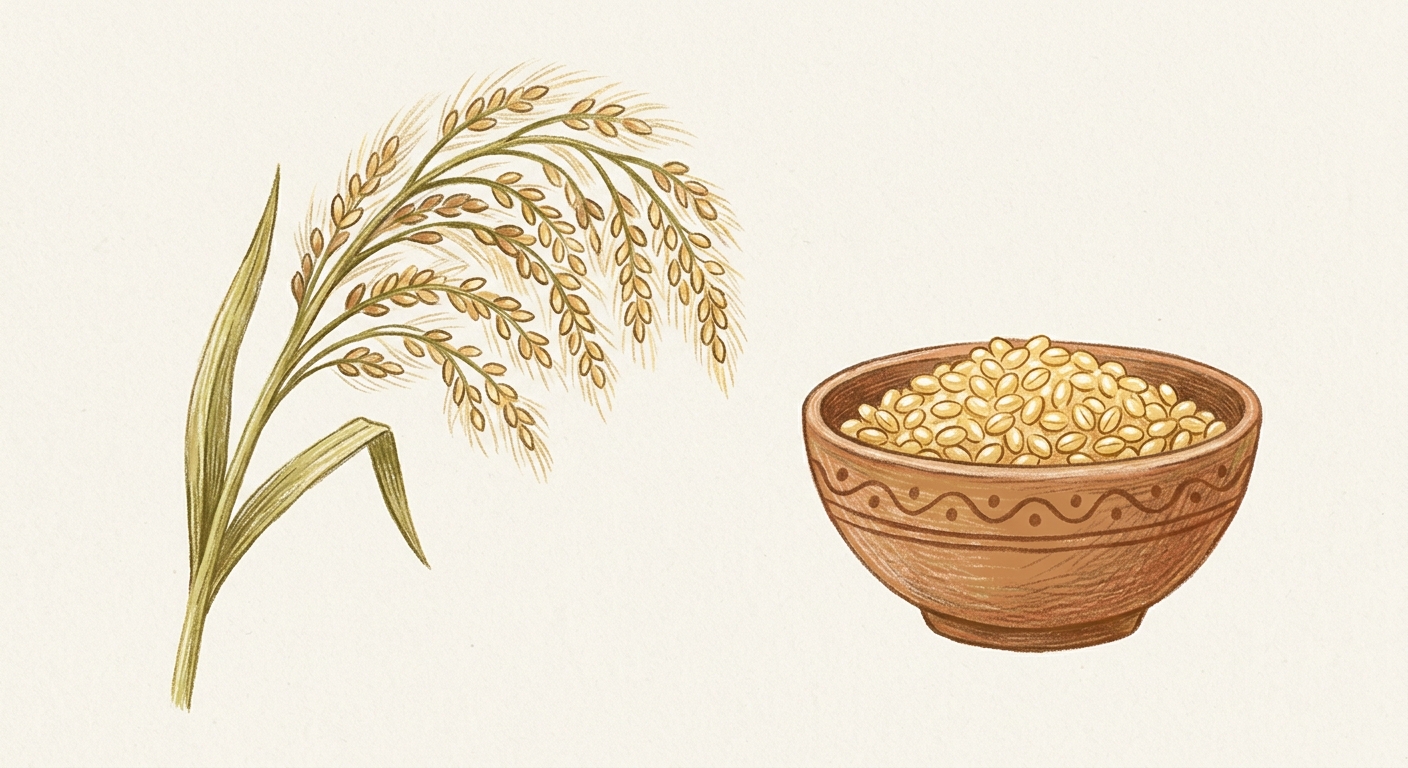
Chena / Common millet
Proso Millet
One of humanity's oldest grains, known in India as chena and panivaragu.
Know this food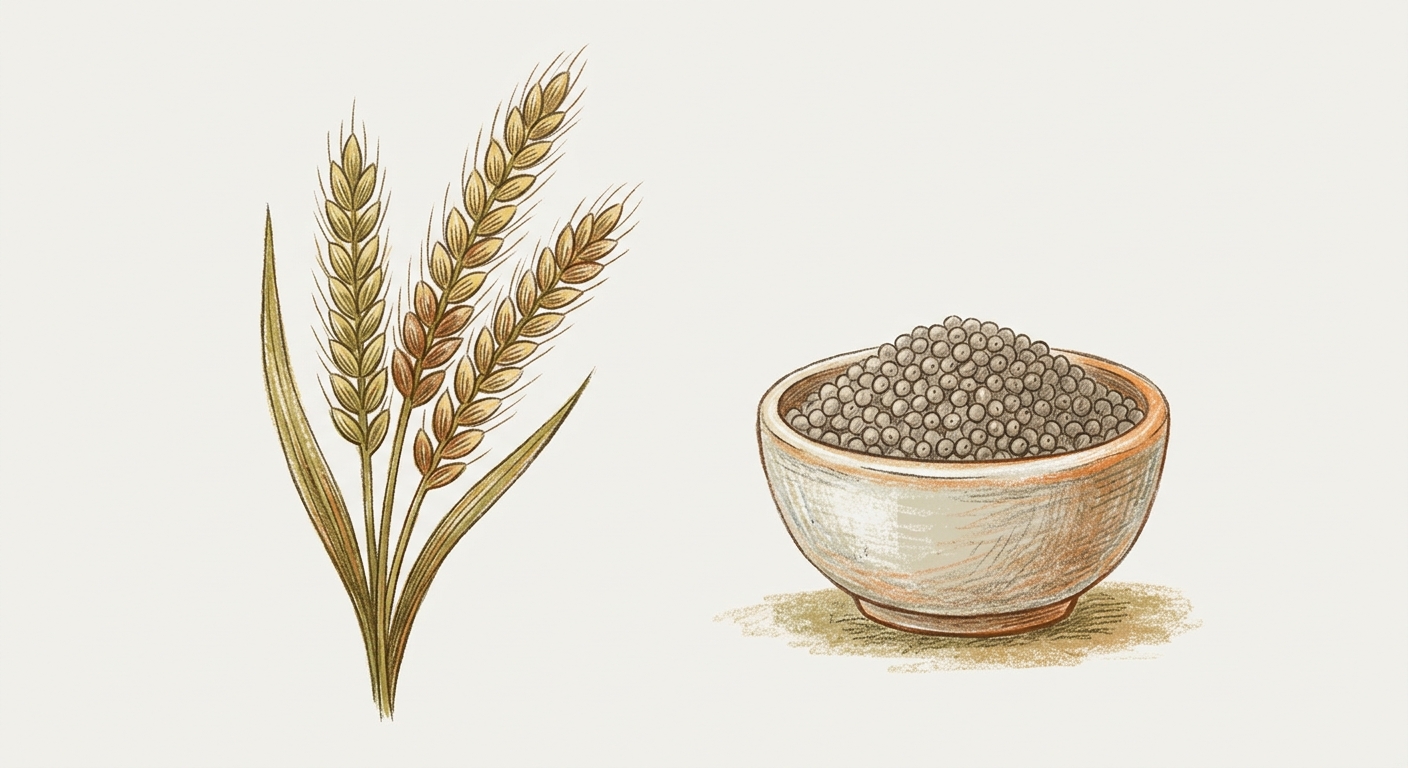
Kodon / Varagu
Kodo Millet
An ancient Deccan grain, still cooked as varagu arisi in Tamil kitchens.
Know this food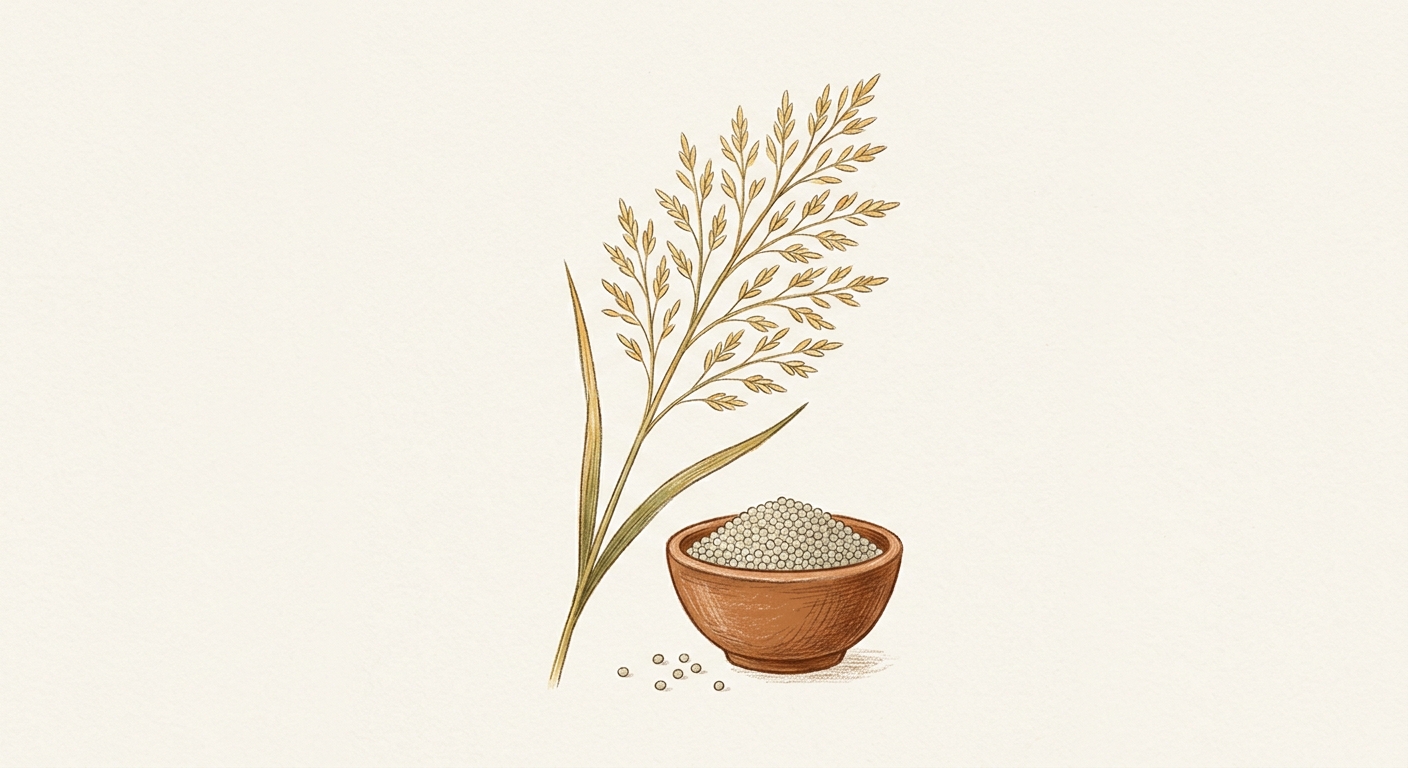
Kutki / Samai
Little Millet
Small name, quiet workhorse, samai upma and pongal are made from this grain.
Know this food