
Sanwa / Samak · Echinochloa frumentacea
BarnyardMillet
The short answer
Barnyard millet (Echinochloa frumentacea) is a fast-growing millet best known in India as a fasting food: the 'vrat ke chawal', 'samak rice' and 'bhagar' eaten during Navratri and other fasts are usually barnyard millet, not rice. It is called sanwa or jhangora in Hindi, kuthiraivali in Tamil, udalu in Telugu and oodhalu in Kannada. The grains are tiny, pale and round, and cook into a light, rice-like texture.
Last reviewed:
Established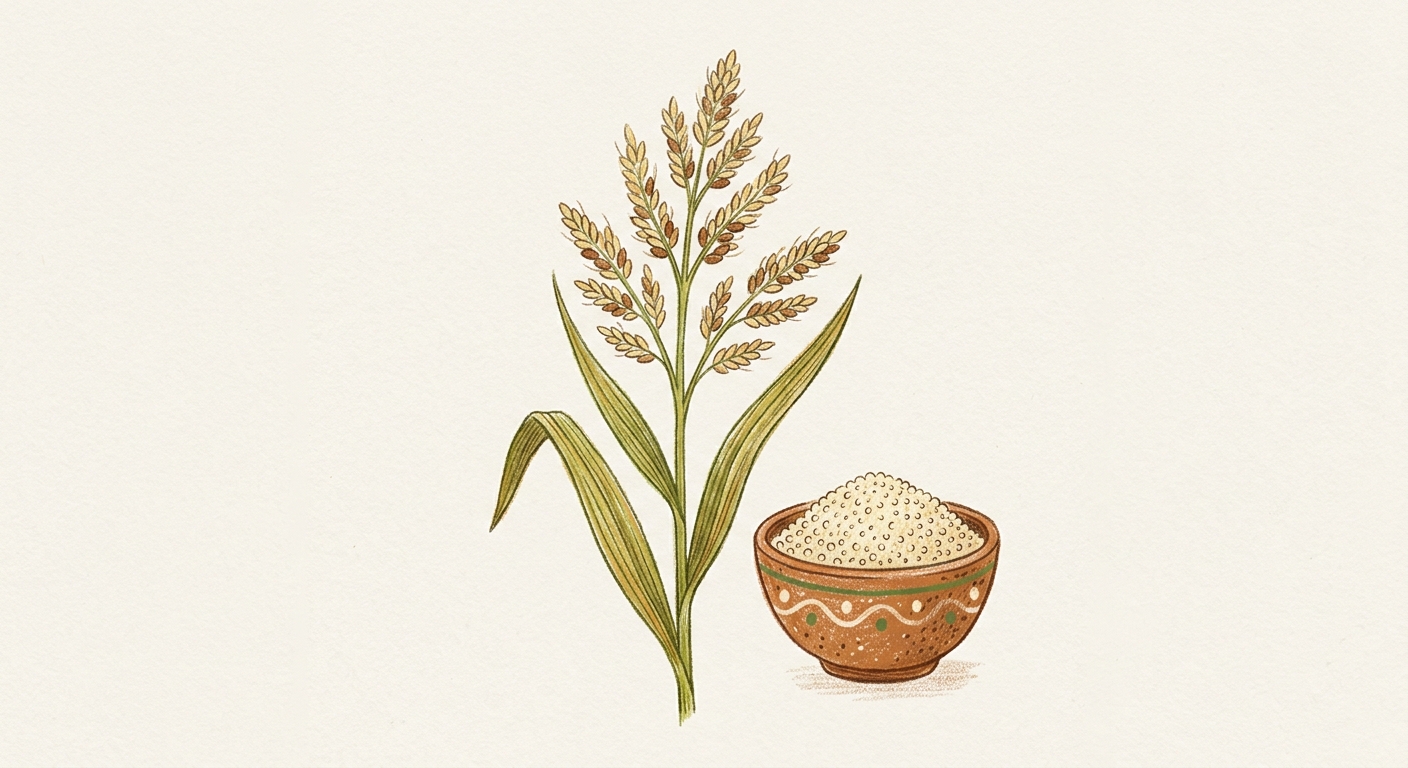
What is Barnyard Millet called in India?
One grain, many names. These are the regional and language names we have verified so far — a bracketed placeholder means we are still checking rather than guessing.
What does Barnyard Millet look like?
Very small, roundish, pale cream to light grey grains, hulled before eating. The crop itself grows quickly and can mature in roughly six to eight weeks.
Where is Barnyard Millet traditionally used?
Eaten across India during religious fasts; grown in Uttarakhand, Maharashtra, Tamil Nadu, Andhra Pradesh, Karnataka and Madhya Pradesh.
How is Barnyard Millet used in food?
Traditional uses
Documented tradition- Samak / bhagar khichdi during Navratri and Ekadashi fasts.
- Vari-bhat (barnyard 'rice') with peanut or potato accompaniments in Maharashtra.
- Kuthiraivali pongal and upma in Tamil Nadu.
Modern uses
Pure Platter interpretation- An everyday rice substitute, pulao, curd 'rice', lemon 'rice'.
- Barnyard millet idli and dosa batters.
- Kheer and payasam.
Barnyard Millet nutrition
| Nutrient | Per 100 g, raw grain |
|---|---|
| Energy | ~307 kcal |
| Protein | ~6.2 g |
| Total fat | ~2.2 g |
| Carbohydrate | ~65.5 g |
| Dietary fibre | ~9.8 g |
| Calcium | ~20 mg |
| Iron | ~5.0 mg |
Values are approximate, per 100 g of raw whole grain, based on the Indian Food Composition Tables (IFCT 2017, ICMR-NIN). Actual values vary with variety, soil, season and processing. Verify against a current laboratory report before quoting.
Comparing grains? Compare all nine in the Millet Library before comparing numbers.
How do you cook Barnyard Millet?
Treat it exactly like rice: rinse, use about 1 part millet to 2 parts water, and simmer 12–15 minutes until just tender. For fasting-style bhagar, cook it soft with cumin, potato and peanut. It absorbs flavours readily, which is why it works so well in pulao and pongal.
Barnyard Millet recipes to start with
Step-by-step recipes
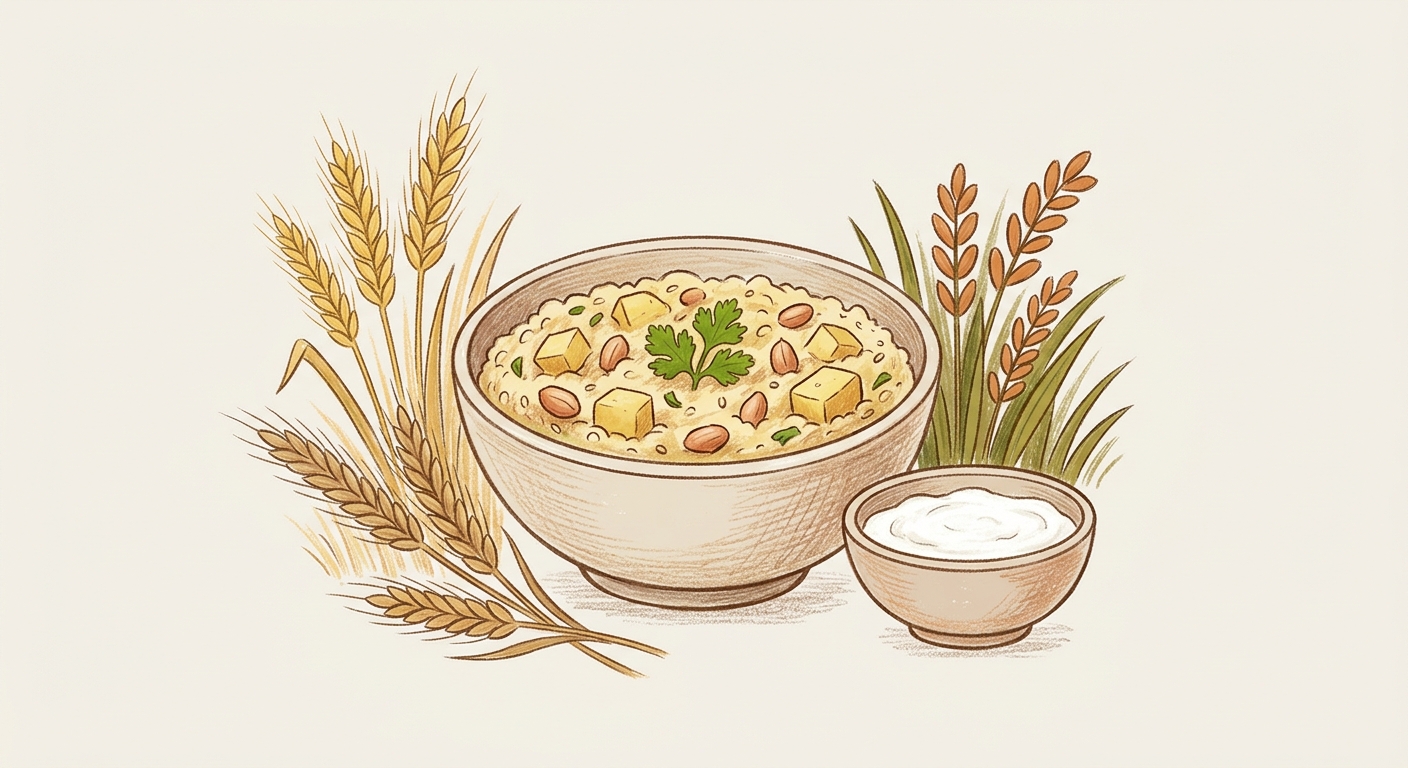
Samak Khichdi (Barnyard Millet, Fasting Style)20 mins · 2
Ingredients
- ½ cup barnyard millet (samak / bhagar), rinsed
- 1 small potato, cubed
- 2 tbsp peanuts
- 1 tsp ghee
- 1 tsp cumin seeds
- 1 green chilli, chopped
- Salt to taste (use sendha namak if fasting)
- 1¼ cups water
Method
- Heat ghee in a pan, add cumin and green chilli
- Add potato and peanuts and sauté 2-3 minutes
- Add the millet, salt and water. Cover and cook on low for 10-12 minutes until soft
- Rest 5 minutes, fluff with a fork and serve with plain curd
Is Barnyard Millet healthier than rice?
Pure Platter interpretationWhether Barnyard Millet is 'healthier than rice' depends entirely on what you compare and how. Per 100 g of raw grain against raw milled white rice (IFCT 2017), Barnyard Millet is generally higher in dietary fibre and several minerals, milling and polishing remove much of the bran from white rice. But 'healthier' is not a single measurable property: portion size, cooking method, what the grain replaces in the meal, and the rest of the diet all matter more than any one number. So we don't claim Barnyard Millet is 'better' than rice, we show you both sets of numbers and let you decide.
Barnyard Millet in a modern kitchen
If you have eaten vrat-ki-khichdi, you already know how barnyard millet behaves: it cooks fast, turns soft and fluffy, and happily carries cumin, peanut, potato and ghee. The same dishes work on ordinary days, samak pulao, lemon 'rice', curd rice, pongal and kheer all translate directly. Because it softens quickly, watch the water: 1:2 is plenty for separate grains.
Buying and storing barnyard millet
Look for it under its fasting names, sama, samak, sanwa, bhagar, as often as 'barnyard millet'. The hulled grains are tiny, pale and round. It is stocked by millet sellers, fasting-food brands and most online grocery platforms. Store airtight and dry like any whole grain.
What makes Barnyard Millet different?
Barnyard Millet is also known as Sanwa / Samak (Echinochloa frumentacea), The fasting grain, bhagar and samak khichdi belong to this millet. Each millet earns its place in the kitchen differently; compare them all in the Millet Library or browse Indian millets.
Frequently asked questions
Is samak rice actually rice?+
No. 'Samak rice' or 'vrat ke chawal' is barnyard millet, a millet, not true rice, which is why it is permitted during many grain-avoiding fasts.
What is bhagar?+
Bhagar is the Marathi name for barnyard millet, widely cooked during fasts in Maharashtra, often with potato, peanut and cumin.
Does barnyard millet cook like rice?+
Yes, and faster than rice. It needs less water and about 12–15 minutes of simmering.
Is barnyard millet only for fasting?+
Traditionally it is strongly associated with fasting, but there is no reason not to eat it as an everyday grain.
Is barnyard millet the same as samvat rice?+
Yes. Samvat rice, samak ke chawal, vrat ke chawal, bhagar and sanwa all refer to barnyard millet, a millet, not true rice.
Why is it called 'barnyard' millet?+
The English name comes from the plant's habit of growing quickly around farms and field edges. It is one of the fastest-maturing millets, ready in roughly six to eight weeks.
Sources & references
- Indian Food Composition Tables (IFCT), 2017ICMR — National Institute of Nutrition, HyderabadSupports: Approximate nutrient composition of Indian foods, including millets, per 100 g edible portion.
- ICAR — Indian Institute of Millets ResearchIndian Council of Agricultural ResearchSupports: Millet taxonomy, cultivation and general agronomic information.
How we read evidence: Established, reliable sources; Documented tradition, recorded practice, not proven effect; Interpretation, our reading of the evidence; Uncertain, we don't know yet.
Related millets
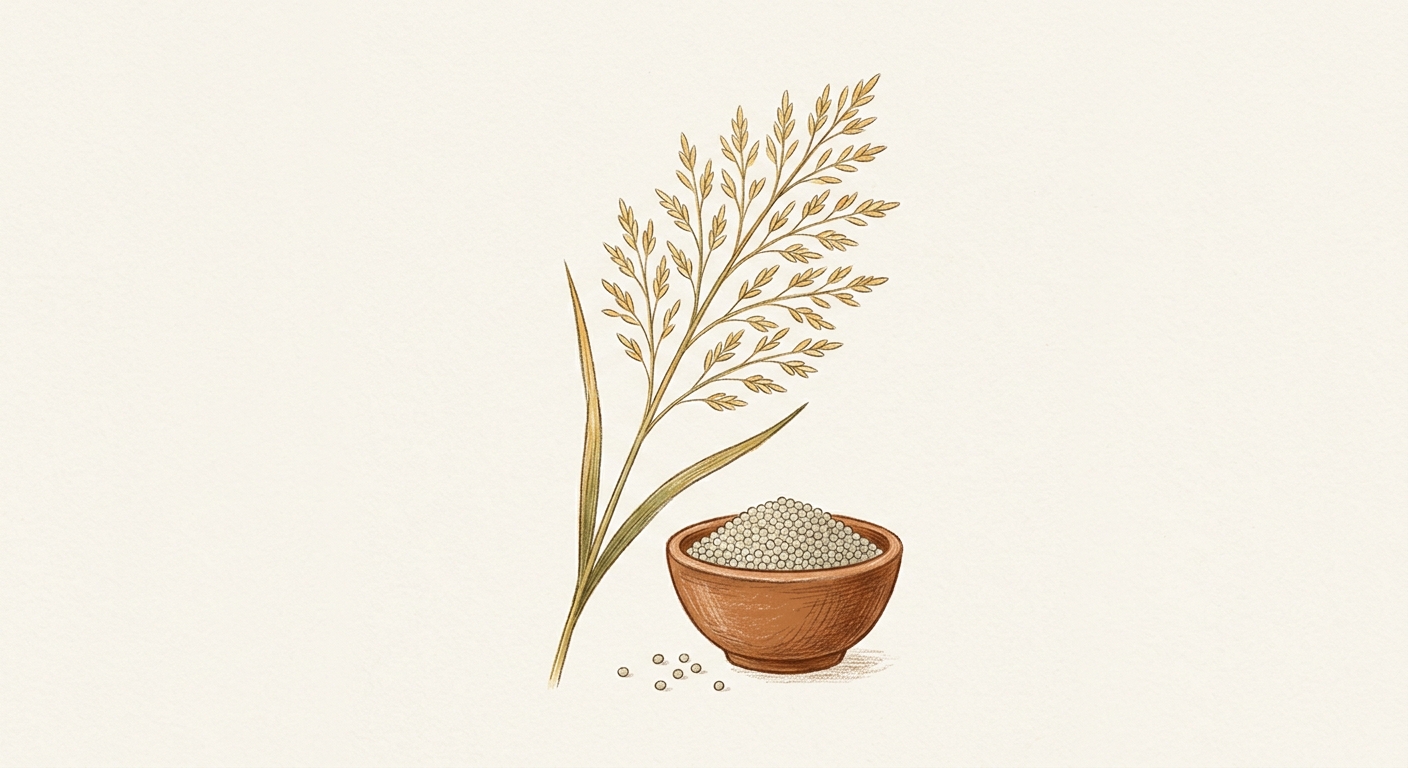
Kutki / Samai
Little Millet
Small name, quiet workhorse, samai upma and pongal are made from this grain.
Know this food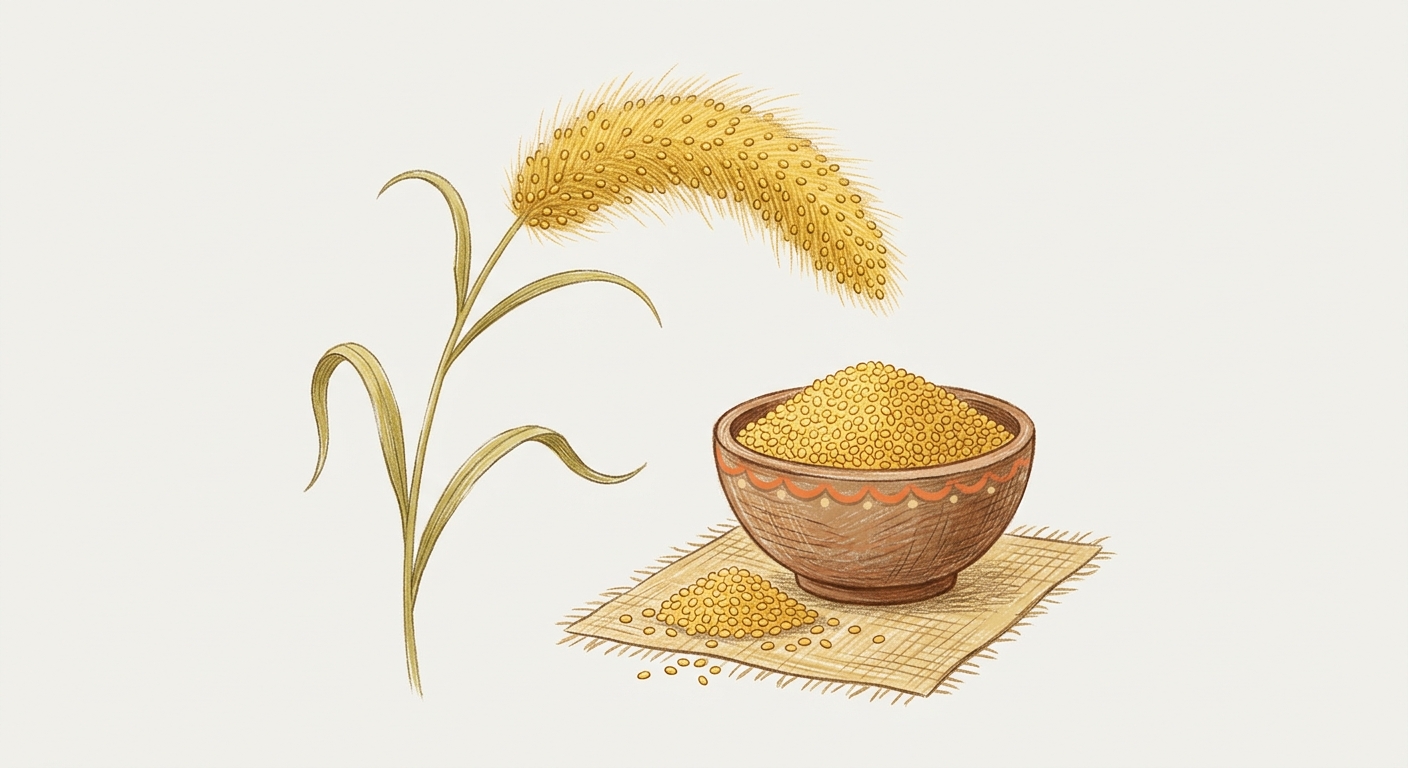
Kangni / Thinai
Foxtail Millet
One of the oldest cultivated millets, small golden grains for pongal, upma and rice-style cooking.
Know this food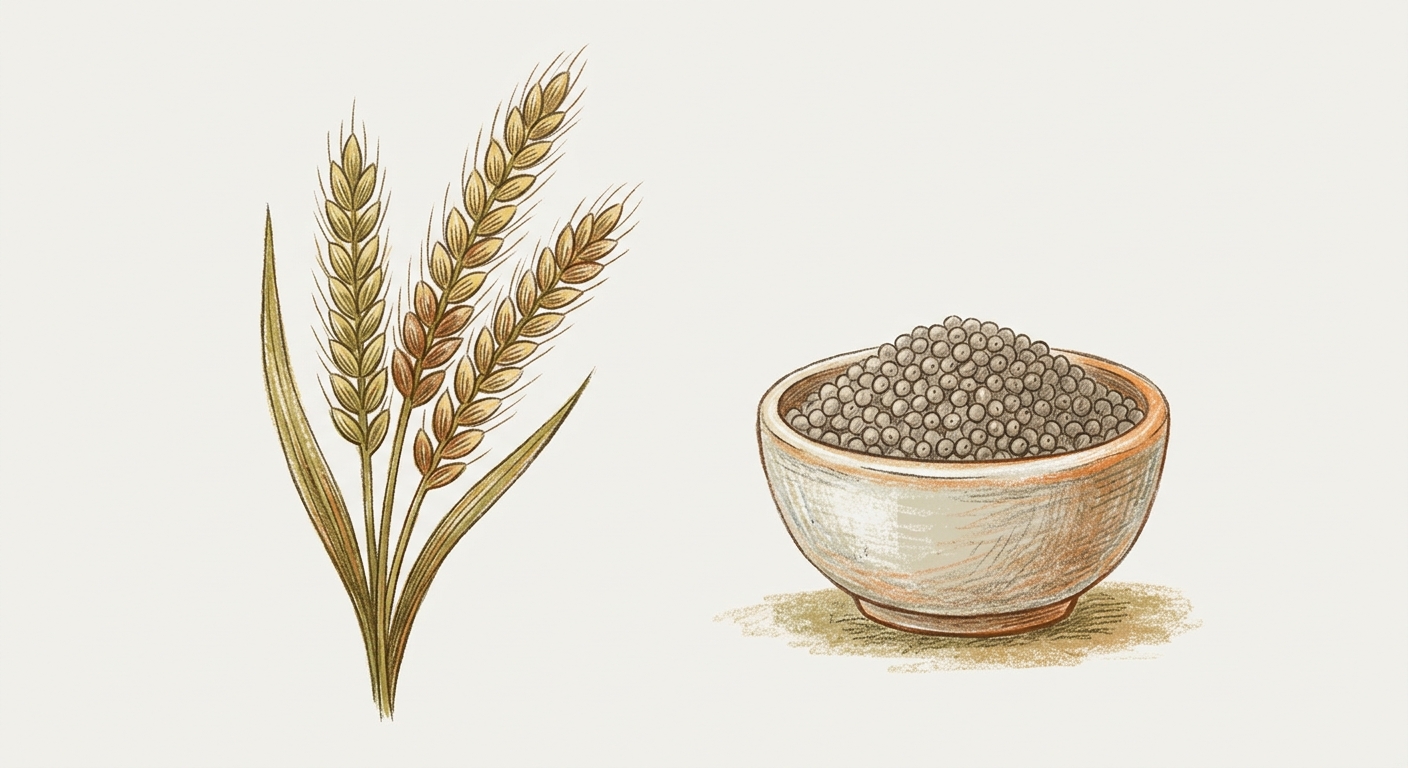
Kodon / Varagu
Kodo Millet
An ancient Deccan grain, still cooked as varagu arisi in Tamil kitchens.
Know this food